I. Industry Background: Why Does Slaughterhouse and Animal By-product Wastewater Require Targeted Treatment?
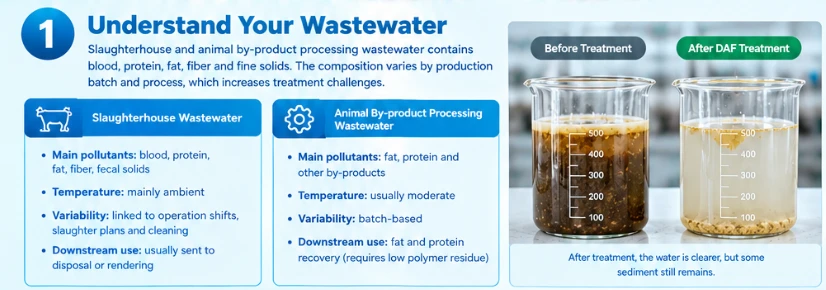
Slaughterhouses and animal by-product processing plants produce industrial wastewater during production that contains blood, proteins, fats, fibers, and fine solid particles. This type of wastewater not only has a high content of organic pollutants, but its water quality also fluctuates with changes in production batches, cleaning operations, and processing steps. Therefore, selecting an appropriate chemical treatment solution is of great significance for improving solid-liquid separation efficiency, enhancing effluent water quality, and reducing the load on downstream treatment stages.
In actual slaughterhouse wastewater treatment, screening equipment can remove larger solid impurities, but relying solely on mechanical filtration is usually insufficient for fine particles and emulsified fats. At this point, coagulation and flocculation are required to aggregate the pollutants dispersed in the water into flocs that are easier to separate.
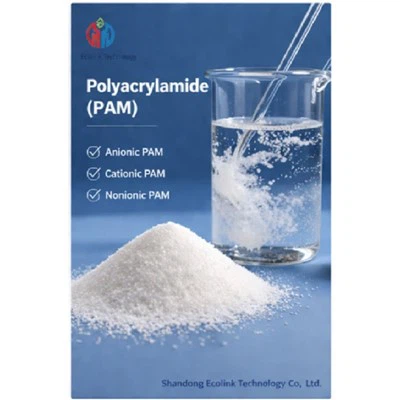
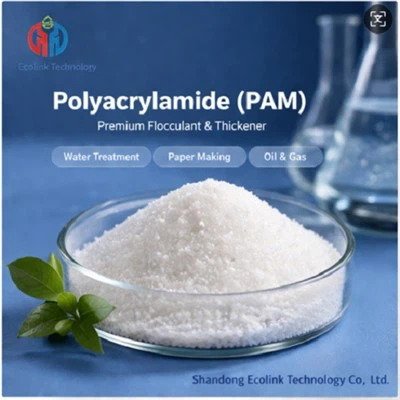
Polyacrylamide (PAM) is one of the commonly used polymer flocculants in industrial water treatment. It can promote the aggregation of fine particles through charge interactions and polymer chain bridging. For treatment systems utilizing Dissolved Air Flotation (DAF), chemical selection must consider not only floc size but also floc strength, buoyancy, and stability during the air flotation process.
ECOLINK TECHNOLOGY focuses on product matching and technical support for water treatment chemicals and equipment. We can provide clients with tailored chemical selection recommendations based on wastewater characteristics, existing treatment processes, and site operating conditions.
II. What Are the Differences Between Slaughterhouse Wastewater and Animal By-product Processing Wastewater?
Although both types of wastewater may contain fats and proteins, the sources, compositions, and fluctuation patterns of the pollutants are not entirely identical. These differences directly affect chemical selection, dosage, and downstream utilization of the skimmed scum.
1. Main Characteristics of Slaughterhouse Wastewater
Slaughterhouse wastewater originates mainly from washing, offal processing, and related production steps. Common pollutants include blood, proteins, fats, fibers, and fecal solids.
Key treatment challenges include:
Complex Organic Pollutants: Blood and proteins increase the organic load of the wastewater, while fats may exist in the form of tiny emulsified droplets.
Significant Water Quality Fluctuations: Different shifts, production schedules, and rinsing phases can generate varying pollutant loads.
Fine Particles Are Difficult to Separate Directly: Emulsified fats and suspended particles may pass through conventional screening equipment, requiring further chemical treatment and solid-liquid separation.
Therefore, slaughterhouse wastewater treatment requires comprehensive consideration of water quality fluctuations, particle surface charges, and the operational characteristics of downstream DAF equipment.
2. Treatment Focus for Animal By-product Processing Wastewater
In animal by-product processing, wastewater may originate from the processing steps of fats, proteins, and other animal by-products. Compared to standard slaughterhouse cleaning wastewater, this type of wastewater also requires attention to the quality of recovered materials.
If the fats and proteins in the DAF skimmed scum need to be further refined or recovered, chemical residue is not merely an effluent quality issue-it may also affect the purpose and quality of the recovered materials.
Therefore, animal by-product processing wastewater treatment needs to address pollutant removal rates, scum cleanliness, and polymer residue levels simultaneously. Dosages should not be continuously increased simply to achieve larger flocs.
III. Why Does Dissolved Air Flotation (DAF) Have Special Requirements for Flocculants?
In sedimentation tanks, flocs need to form sufficient mass and density to settle downward; in Dissolved Air Flotation (DAF) systems, flocs need to attach to micro-bubbles and float to the water surface.
This difference determines that the two processes cannot simply use the same chemical screening methodology.
During air flotation, coagulants are typically used to weaken electrostatic repulsion between particles, helping fine particles form micro-flocs; polymer flocculants then aggregate micro-flocs into larger flocs through adsorption and bridging.
Ideal flocs need to possess the following characteristics:
Appropriate Size: Capable of effectively capturing air bubbles to promote pollutant flotation.
Stable Structure: Resilient against breaking up during mixing, conveyance, and air flotation.
Good Buoyancy: Capable of fully combining with air bubbles rather than forming overly dense flocs that are difficult to float.
Facilitates Downstream Processing: Scum should be easy to skim, and deposited sludge should be convenient for subsequent dewatering or disposal.
For slaughterhouse wastewater treatment systems using DAF, chemical screening must evaluate floc formation, flotation performance, and post-separation water clarity simultaneously, rather than judging treatment effectiveness solely by floc size.
IV. Two Common Chemical Approaches: Cationic Polymer Alone, or Inorganic Coagulant plus Anionic Polymer
For DAF treatment of meat processing wastewater, comparative testing can typically begin with two technical routes.
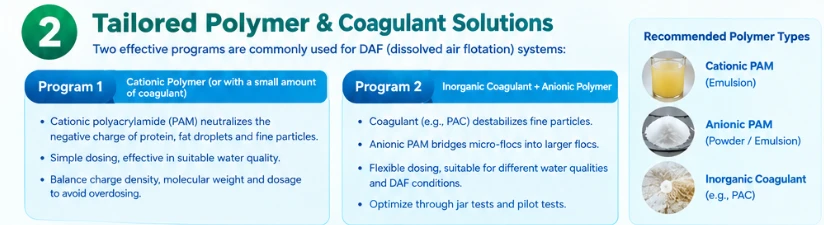
Option 1: Using Cationic Polyacrylamide Alone or with a Small Amount of Coagulant
Cationic polyacrylamide can promote the aggregation of negatively charged proteins, fat droplets, and fine particles through charge neutralization and polymer bridging.
The feature of this scheme is a relatively simple chemical combination, which can reduce chemical addition steps under suitable water quality conditions. However, its performance is affected by cationic charge density, molecular weight, raw water composition, and dosage.
If charge neutralization is insufficient, fine particles may remain dispersed in the water; if over-dosed, it may lead to increased chemical consumption and even adversely affect floc structure and solid-liquid separation.
Therefore, when selecting cationic products, testing should begin with moderate charge density and a reasonable molecular weight range, rather than directly seeking the highest molecular weight or highest charge.
Option 2: Inorganic Coagulant plus Anionic Polyacrylamide
Another common scheme is to use an inorganic coagulant first to destabilize fine particles and form micro-flocs, followed by adding anionic polyacrylamide to aggregate the micro-flocs into larger flocs through bridging.
Polyaluminum chloride (PAC) is one of the evaluable inorganic coagulants. Its applicability still needs to be evaluated in conjunction with water quality, pH, coagulant dosage, and downstream flotation conditions.
Specific research data referenced in the attachment are as follows:
In a DAF study on poultry slaughterhouse wastewater, the average suspended solids (SS) concentration of raw wastewater was approximately 1330 mg/L, and Chemical Oxygen Demand (COD) was approximately 1840 mg/L.
After treatment with inorganic coagulant and flocculant, the SS concentration dropped to approximately 32 mg/L, and COD dropped to approximately 366 mg/L.
Treatment conditions referenced in another study were: saturation pressure of 300 kPa, PAC dosage of 24 mg/L, and anionic polymer dosage of 1.5 mg/L.
A treatability study on slaughterhouse wastewater showed that optimal treatment performance under those specific study conditions was achieved with a PAC dosage of approximately 200 ppm and an anionic polymer dosage of 2 ppm.
These results indicate that a reasonable combination of coagulation and flocculation can improve the removal efficiency of suspended solids and organic pollutants. However, the above data originate from specific research conditions and cannot be directly used as design parameters or performance guarantees for all engineering projects.
In practical applications, appropriate chemical combinations should be determined through jar tests or benchtop DAF flotation tests, and validated with field operational data.
V. How to Determine Polymer Charge, Molecular Weight, and Product Form?
Selecting the appropriate flocculant requires comprehensive consideration of wastewater composition, upstream coagulation conditions, DAF equipment characteristics, and downstream sludge treatment requirements.
1. Charge Type: How to Choose Between Cationic and Anionic?
When the primary targets of wastewater treatment are proteins and emulsified fats, cationic products can be evaluated first, as their charge interactions can be advantageous in promoting the aggregation of relevant pollutants.
If the wastewater has already been treated with metal salt coagulants to form micro-flocs, anionic products or products with low charge density can be evaluated further to improve bridging and floc growth.
This does not mean that a single charge type is suitable for all slaughterhouse wastewater. The ionic composition, pH, pollutant concentration of raw water, and the type of coagulant used will all alter the actual performance of the polymer.
2. Molecular Weight: Higher Is Not Always Better
Polymers with medium to high molecular weight typically possess strong bridging potential, helping form larger flocs. However, when the molecular weight is excessively high, flocs may become overly dense or fail to maintain a structure suitable for air flotation under actual hydraulic conditions.
Therefore, it is recommended to conduct comparative tests across adjacent molecular weight grades, observe floc strength, flotation speed, and effluent clarity, and then determine the suitable range.
3. Charge Density: Balancing Treatment Effect and Chemical Consumption
Higher cationic charge density may be beneficial for treating wastewater with higher organic content, but it also increases the risk of overdosing.
If chemicals are over-dosed, it will not only increase operating costs but may also alter particle surface charge states, impairing floc formation. Therefore, screening should begin with a moderate charge density and be adjusted based on test results.
4. Product Form: Emulsion vs. Powder
Emulsion products generally feature faster preparation and dynamic response, making them suitable for facilities with limited makeup space that desire simplified on-site operations.
Powder products are suitable for sites equipped with dedicated dissolving and makeup systems, and may offer advantages when comparing costs per kilogram of active polymer. However, actual cost-effectiveness should also account for dissolving equipment, labor, aging time, and operation/maintenance costs.
ECOLINK TECHNOLOGY can assist in evaluating the applicability of different product forms based on customer existing dosing equipment, treatment capacity, and site conditions. Final product selection should always be based on actual water sample testing and operational performance.
VI. How Do Dosing Sequence, pH, and Mixing Conditions Affect Treatment Results?
Even if the appropriate product is selected, optimal DAF performance may not be achieved if the dosing point, mixing intensity, or aging conditions are unsuitable.
In DAF systems, flocs typically need to form before entering the flotation zone and remain intact during subsequent conveyance. Therefore, the chemical application method is as important as the chemical properties themselves.
Recommended Process Operating Sequence
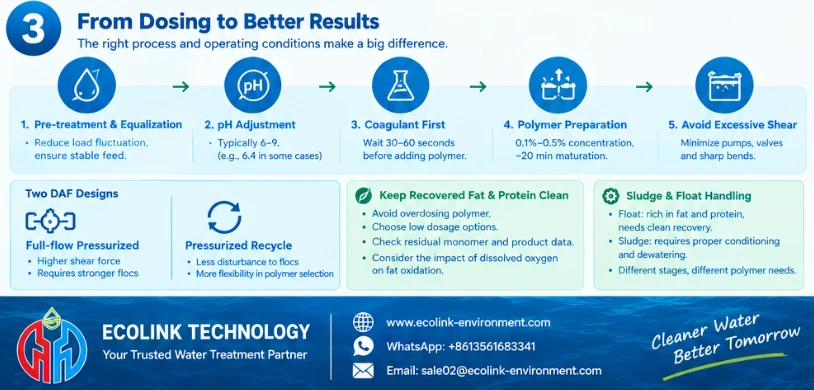
Step 1: Pretreatment and Flow Equalization
Properly screen and equalize the raw wastewater to minimize load fluctuations caused by concentrated inflows of blood, fats, and wash water at different operational times.
Step 2: Adjust pH
Adjust the pH to a suitable range according to the coagulant and polymer system utilized.
Patent literature referenced in the attachment regarding animal processing wastewater notes a pH range of approximately 6 to 9. Among these, a Romanian plant case study using ferric chloride and caustic soda for flocculation reported a pH close to 6.4.
These values are provided solely to understand relevant process conditions and should not replace test results on specific water samples.
Step 3: Dosing Coagulant First, Then Polymer
For processes requiring inorganic coagulants, add the coagulant first and wait 30 to 60 seconds to allow micro-flocs to form before adding the polymer.
The actual waiting time needs to be adjusted based on mixing conditions, chemical types, and floc formation status.
Step 4: Control Polymer Preparation and Aging
The attachment references an emulsion polymer preparation concentration of 0.1% to 0.5%, with an aging time of approximately 20 minutes, after which it is added into a gentle flocculation tube or flocculation tank.
During on-site use, technical datasheets and operating instructions for the specific product must be followed, avoiding rigid application of this reference condition to all products.
Step 5: Minimize Unnecessary Shear
Avoid placing unnecessary pumps, valves, or sharp bends between the polymer dosing point and the DAF tank, as excessive shear forces can break up formed flocs.
Difference Between Full-Flow Pressurization and Recirculation Pressurization
Different DAF equipment designs affect the mechanical forces exerted on flocs.
In full-flow pressurization systems, flocs may experience higher shear forces; thus, verifying their mechanical stability is critical.
In recirculation pressurization systems, flocs in the raw water do not undergo the full-flow pressurization process in the same manner, which may offer greater flexibility in polymer selection.
Regardless of the equipment type used, stable floc flotation must be verified under actual hydraulic conditions.
VII. Why Must Chemical Residue Be Controlled in Animal By-product Processing?
For wastewater treatment systems focused solely on effluent compliance, chemical dosing is primarily optimized around pollutant removal efficiency and operating costs.
However, if the fats and proteins generated from air flotation need to be recovered, the skimmed scum itself carries economic value. In such cases, chemical residue becomes part of product quality control.
If polymers are over-dosed simply to achieve larger flocs, residual chemicals may enter downstream processing stages along with the scum. Therefore, treatment effectiveness cannot be evaluated solely by the volume of scum on the water surface.
Key Focus Areas Recommended:
Base decisions on experimentally determined effective dosages. Do not arbitrarily increase polymer dosage merely to achieve a so-called safety margin.
Prioritize comparing schemes that achieve target results at lower dosages. Feasibility of combining a small amount of coagulant with a lower polymer dose can be evaluated provided treatment requirements are met.
Request and review product residue technical documentation. For different product grades under consideration, request applicable residual monomer data and technical files from suppliers, and evaluate them against recovery applications and relevant regulations.
Additionally, the potential impact of dissolved air on fat oxidation warrants attention. For systems involving fat recovery, DAF process design, retention time, and downstream storage conditions should be considered comprehensively, rather than attempting to solve all issues purely by increasing chemical dosing.
VIII. Downstream Processing of Scum and Sludge Is Equally Important
The air flotation process produces two streams of material that require separate management: skimmed scum on the water surface, and settled solids at the bottom of the system.
Neglecting downstream handling of these two streams can lead to dewatering difficulties, elevated transport costs, or inconsistent recovered material quality, even if the front-end DAF operates well.
1. Scum Processing and Fat Recovery
DAF skimmed scum is typically rich in fats and proteins and exhibits a degree of stickiness.
If scum is used for further refining or recovery, priority should be given to its cleanliness, compositional stability, and chemical residue levels. Therefore, polymer dosage should aim at achieving effective separation while avoiding unnecessary excess.
2. Sludge Conditioning and Dewatering
If scum or settled sludge requires dewatering or disposal, focus should be placed on sludge stability, thickening degree, and mechanical dewatering performance.
It should be noted that polymers suitable for DAF separation are not necessarily the best dewatering chemicals for filter presses or centrifuges. Because objectives vary across treatment stages, product screening and dosage testing should be conducted separately.
Therefore, when formulating an overall treatment plan, it is recommended to treat front-end DAF and downstream sludge dewatering as two interconnected yet independently optimized steps.
IX. How to Conduct Effective Jar Tests and Flotation Tests?
Traditional jar tests focus primarily on observing particle settling, whereas flotation tests must judge whether flocs can effectively attach to micro-bubbles, form stable scum, and improve post-separation water quality.
Therefore, selecting chemicals based solely on floc settling speed or static appearance may fail to accurately reflect operational performance in actual DAF systems.
Recommended Testing Workflow
Collect Representative Water Samples Collect wastewater samples across a full production day, including washing cycles, and record pH, temperature, and visible fat content. For plants with high water quality variability, avoid making final determinations based on samples from a single time period.
Parallel Comparison of Two Treatment Routes Separately test the cationic polymer alone scheme and the inorganic coagulant plus anionic polymer scheme. Set three polymer dosages for each scheme to compare treatment results across doses. Specific dosages should be determined based on water sample and product properties rather than directly copying data from other plants.
Observe Floc-Bubble Interactions Record floc size, structural strength, flotation speed, and clarity of the water beneath the scum. Evaluation should not only focus on whether scum forms, but also investigate residual suspended solids in the water and overall separation efficiency.
Retest Under Different Loads Conduct further tests on the two top-performing schemes under different influent loading conditions. This mitigates the risk of misinterpreting test results from a single low-load period as representative of year-round stable performance.
Establish Verifiable Operational Parameters Final recommendations should be documented as verified dosage ranges, clearly defining conditions (water quality, load, or effluent performance) that warrant re-testing.
If conditions permit, benchtop DAF flotation testing is recommended to verify chemical performance. If such equipment is temporarily unavailable, systematic comparative jar tests can narrow down candidate products prior to on-site validation.
X. How ECOLINK TECHNOLOGY Assists in Optimizing Industrial Wastewater Treatment Solutions
Water quality, equipment, and recovery requirements can vary significantly among slaughterhouses and animal by-product processing plants. Therefore, chemical models should not be determined based solely on industry category.
ECOLINK TECHNOLOGY focuses on product matching, technical support, and one-stop services for water treatment chemicals and equipment. Based on client-provided water quality data and existing processes, we can assist with the following:
Analyzing primary pollutant characteristics and water quality fluctuations in wastewater.
Evaluating the applicability of cationic polymers, anionic polymers, and inorganic coagulant combinations.
Screening candidate products based on DAF equipment type, dosing conditions, and downstream treatment needs.
Assisting in developing sample comparative testing methodologies to analyze floc formation, flotation capability, and separation effectiveness.
Providing applicable product technical documentation according to actual application requirements, and evaluating chemical needs for downstream sludge dewatering.
If your DAF system experiences issues such as flocs forming but failing to float, fragile flocs breaking easily, persistent effluent turbidity, or elevated chemical consumption, please prepare wastewater analysis reports, current chemical schemes, actual dosages, and DAF equipment process flow diagrams. This will allow for further analysis of whether issues stem from chemical selection, pH control, mixing conditions, or equipment operation.
For slaughterhouse and animal by-product wastewater treatment, a truly effective solution is not simply adding more chemicals, but achieving a balance among pollutant removal, chemical costs, scum quality, and sludge handling through representative water testing, proper process matching, and continuous operational monitoring.
Contact ECOLINK TECHNOLOGY to discuss water treatment chemical and equipment solutions tailored to your actual water quality and process conditions.
Company Name: ECOLINK TECHNOLOGY
Official Website: www.ecolink-environment.com
WhatsApp: +8613561683341
Email: sale02@ecolink-environment.com