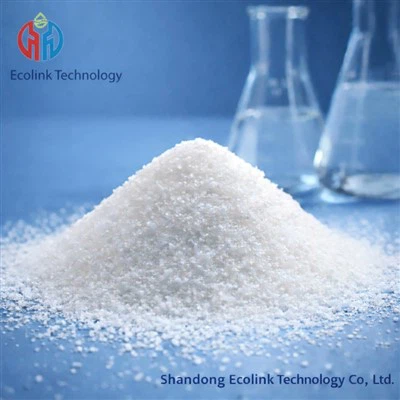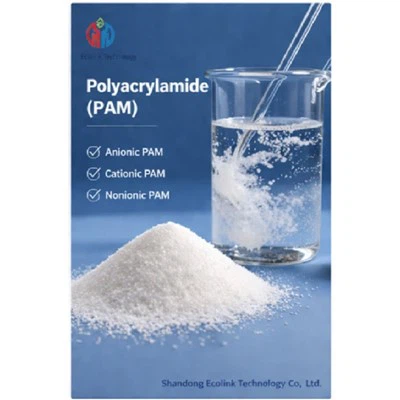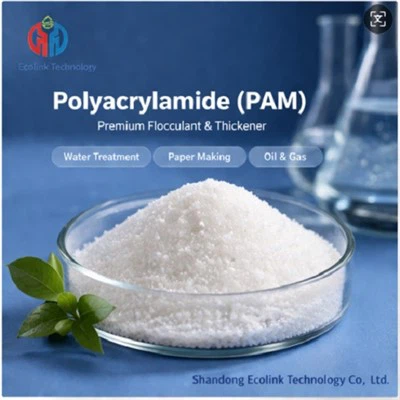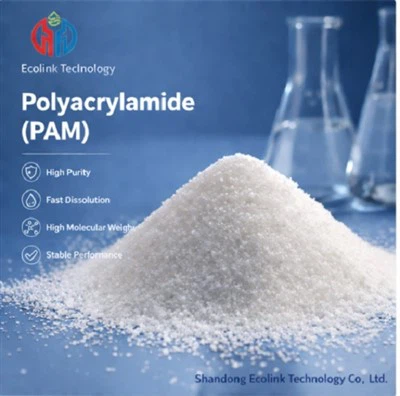

Shandong Ecolink Technology Co., Ltd. is one of the most reliable manufacturers and suppliers of drilling fluid additives in China, featured by quality products and good service. If you're going to wholesale high quality drilling fluid additives, welcome to get more information from our factory.
Product Overview

Cationic Polyacrylamide (CPAM), also known as cationic PAM or shale inhibitor, is an important chemical treatment agent used in oilfield drilling operations. It is specifically designed to address issues such as shale and clay swelling upon water contact and wellbore instability or collapse. As a drilling fluid additive, CPAM acts as a "wellbore stabilizer" - requiring low dosage, delivering strong performance, and providing long-lasting effects. It is a core treatment agent when drilling through shale, clay, and other collapse-prone formations. As a highly efficient clay stabilizer, it fundamentally reduces downhole risks caused by water-sensitive formations.
Products Description
To address common customer concerns such as unstable performance and batch-to-batch inconsistency in water treatment chemicals, we implement standardized production processes and strict quality control systems to ensure that our Cationic Polyacrylamide (CPAM) maintains stable and reliable quality.
This oilfield-grade CPAM undergoes multiple layers of testing from raw material selection to final delivery and complies with international standards. It provides customers with greater confidence during long-term use and reduces risks associated with switching suppliers. Whether used as a drilling fluid anti-collapse agent or a water-based drilling fluid additive, our product consistently delivers stable and dependable performance.

Product Parameter (specification)
|
Parameter |
Specification |
|
Appearance |
White powder |
|
Specific Gravity |
Approx. 1.3 |
|
pH (5% Solution) |
4.0–6.5 |
|
Solid Content |
≥90% |
|
Water Insoluble |
≤5.0% |
|
Moisture Content |
≤10.0% |
|
Fineness |
100% passing 30 mesh |
|
Recommended Dosage |
3–7 ppb (lb/bbl) or 0.1%–0.6% |
Application Scenarios & Recommended Parameters
|
Application Scenario |
Function |
Recommended Parameters |
|
Water-Based Drilling Fluid |
Shale inhibitor, prevents wellbore collapse |
Molecular weight: 100k–260k; Ionic degree: 20%–60% |
|
Clay Stabilizer |
Prevents clay hydration and swelling |
Molecular weight: 3–8 million; Ionic degree: 30%–50% |
|
Polymer Drilling Fluid System |
Enhances inhibition, controls formation slurry |
Molecular weight: 5–12 million |
|
Completion / Workover Fluids |
Stabilizes wellbore, protects oil & gas layers |
Low molecular weight, medium ionic degree |
|
Acidizing Thickener (Oilfield) |
Increases acid fluid viscosity |
High molecular weight, low ionic degree |
Product Features & Advantages
High-Efficiency Shale Inhibition
Advantage: Swelling inhibition rate can exceed 90%, and performance can be further enhanced when used with potassium chloride (KCl).
👉 Customer Benefits:
- Effectively prevents wellbore collapse and reduces downhole risks
- Minimizes non-productive time (NPT) and ensures drilling progress
- Improves drilling success rate and lowers overall operational costs
As a high-performance shale inhibitor, this product demonstrates outstanding performance in suppressing clay hydration and swelling.
Fast Adsorption & Long-Lasting Stability
Advantage: Rapidly adsorbs drill cuttings, inhibits hydration dispersion, and delivers long-lasting performance.
👉 Customer Benefits:
- Improves solids control efficiency and facilitates cuttings removal
- Reduces repeated dosing and lowers chemical consumption
- Maintains long-term drilling fluid stability and reduces adjustment frequency
This cationic drilling fluid additive quickly adsorbs onto clay particle surfaces, forming a durable protective film.
Excellent Compatibility
Advantage: Suitable for various drilling fluid systems and compatible with conventional additives.
👉 Customer Benefits:
- Easily integrates into existing systems without major formulation changes
- Reduces testing and switching costs
- Enhances overall treatment performance and minimizes formulation conflicts
As an oilfield chemical additive, CPAM shows strong adaptability and compatibility.
Non-Foaming & Safe Operation
Advantage: Does not generate foam during use, ensuring system stability.
👉 Customer Benefits:
- Prevents foam from affecting circulation and measurement
- Reduces the need for additional defoamers
- Improves on-site operational safety and stability
Strong Temperature & Salt Resistance
Advantage: Withstands temperatures of 160–200°C and performs well in high-salinity and high-calcium environments.
👉 Customer Benefits:
- Suitable for deep wells and complex high-temperature, high-salinity conditions
- Reduces the frequency of chemical replacement
- Improves operational continuity and reduces downtime risks
This product not only enhances drilling fluid performance but also helps customers reduce downhole risks, improve operational efficiency, and lower overall costs. It is especially suitable for complex conditions and high-difficulty drilling operations. Whether used as cationic polyacrylamide for drilling fluids or as an oilfield chemical additive, it delivers significant value to customers.
Application Fields

Main Application Scenarios
Water-Based Drilling Fluids
Application: Shale inhibition and prevention of wellbore collapse
👉 Recommended Combination:
Shale inhibitor (this product) + Polyacrylamide (PAM) + KCl
Completion / Workover Fluids
Application: Wellbore stabilization and reservoir protection
👉 Recommended Combination:
Clay stabilizer + low-damage polymer + fluid loss control agent
Polymer Drilling Fluid Systems
Application: Enhance inhibition and control formation slurry
👉 Recommended Combination:
Cationic PAM + high molecular weight PAM + viscosifier
High-Density Drilling Fluid Systems
Application: Stabilize rheology and prevent sedimentation
👉 Recommended Combination:
CPAM anti-collapse agent + weighting agent + rheology modifier
Production & Quality Assurance
ECOLINK's Cationic Polyacrylamide (CPAM) is produced using a mature manufacturing process, supported by a full-process quality control system to ensure product stability. All key parameters are strictly controlled during production rather than relying solely on final inspection. Each batch is traceable and accompanied by testing data for customer verification.
Through process control combined with data support, procurement uncertainty is significantly reduced. This allows customers to proactively avoid quality risks and ensure more reliable purchasing decisions. As a professional manufacturer of oilfield drilling fluid additives, we guarantee stable and consistent performance for every batch.
Recommended Dosage
General recommendation: 3–7 ppb (lb/bbl) or 0.1%–0.6% (by volume)
For highly water-sensitive formations: dosage can be increased up to 0.4%
Application Method
- It is recommended to prepare a 0.5%–1% solution first. Slowly add the powder into water under continuous stirring.
- Ensure sufficient mixing to achieve full dissolution.
- Avoid adding dry powder directly into the mud tank to prevent clumping.
- Maintain proper mixing conditions during application.
- When used in combination with potassium chloride (KCl), the potassium ion concentration should not be lower than 60,000 ppm.
Frequently Asked Questions (FAQ)
Q1: What is the difference between Cationic PAM and Anionic PAM? Where are they used?
A:
|
Comparison Item |
Cationic PAM (CPAM) |
Anionic PAM (APAM) |
|
Charge |
Positively charged |
Negatively charged |
|
Main Function |
Shale inhibition, clay stabilization |
Viscosity enhancement, fluid loss control, enhanced oil recovery |
|
Application |
Anti-collapse, inhibition of slurry formation |
Increase viscosity, control filtration loss, tertiary oil recovery |
In simple terms: Cationic PAM is used for inhibition and anti-collapse, while Anionic PAM is used for viscosity and oil recovery.
Q2: Which is better, Cationic PAM or Potassium Chloride (KCl)?
A: They can be used together for better performance.
|
Comparison Item |
Potassium Chloride (KCl) |
Cationic PAM |
|
Mechanism |
Potassium ions intercalate into clay layers |
Polymer adsorption forms a protective film |
|
Dosage |
High (5–10%) |
Low (0.1%–0.4%) |
|
Environmental Impact |
High salinity, some environmental pressure |
More environmentally friendly |
|
Synergy |
Combined use enhances inhibition |
- |
Recommendation: For high inhibition requirements, use a combined system of KCl + Cationic PAM.
Q3: Will Cationic PAM react with other drilling fluid additives?
A: Generally, it has good compatibility. Notes:
- When used with anionic polymers, add cationic PAM first
- When used with salts such as KCl, ensure sufficient electrolyte concentration
- Conduct compatibility tests before use
Q4: What is the recommended dosage?
A: Typical dosage: 0.1%–0.6% (by volume)
- Normal formations: 0.1%–0.2%
- Highly water-sensitive formations: 0.3%–0.6%
Q5: What precautions should be taken during use?
A:
- Must be fully dissolved; do not add dry powder directly
- Avoid contact with strong oxidizing agents
- Store in a cool, dry place to prevent moisture and caking
- Wear protective equipment; avoid contact with eyes and skin
Q6: Can it be used in high-temperature deep wells?
A: Yes. The product has excellent thermal resistance, with some grades capable of withstanding 160–200°C, making it suitable for deep and ultra-deep high-temperature well conditions. This high-temperature-resistant CPAM is especially effective in demanding drilling environments.
Our Services
A. Direct Supply from Source Factory
B. Customized R&D and Sample Support
C. Strict Quality Control and Packaging
D. Innovation-Driven Solutions
E. One-Stop Global Logistics
F. Full Technical Support Throughout the Process


CTA
If you are looking to reduce treatment costs and improve efficiency, feel free to contact us for optimized solutions. We will recommend the most cost-effective product combinations tailored to your needs.
Hot Tags: drilling fluid additives, China drilling fluid additives manufacturers, suppliers, factory, Water Shutoff Polymer, Biosolids Dewatering Polymer, First pass retention FPR improvement chemical, Cationic Coagulant, Clay Stabilizer, Non ionic Polyacrylamide CAS 9003 05 8