Product Overview
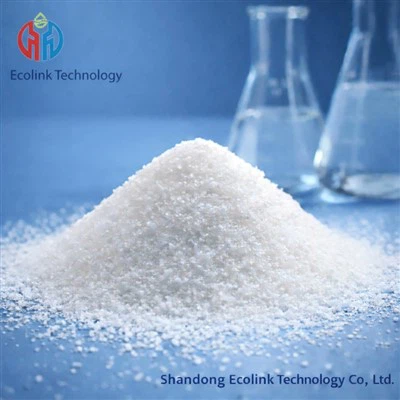
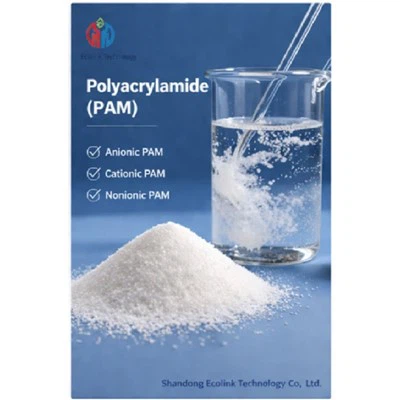
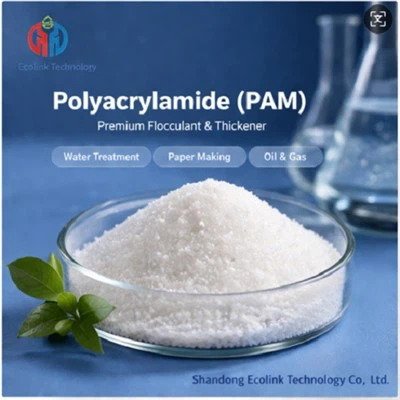
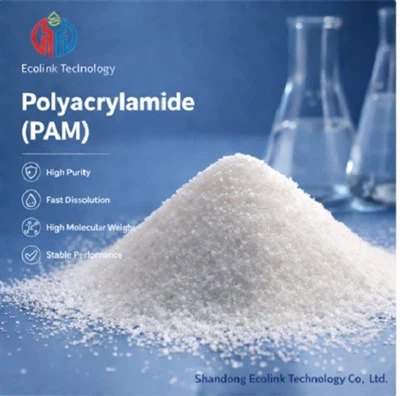
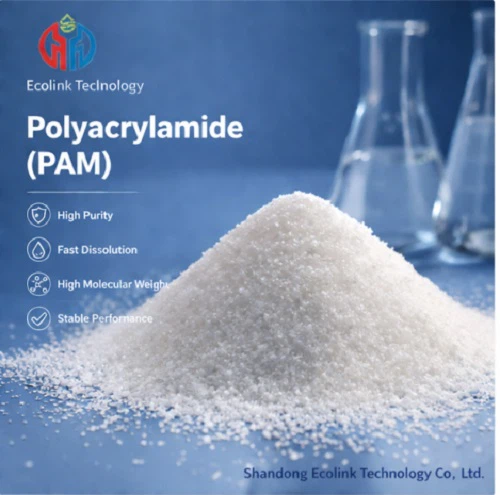
Cationic Polyacrylamide (CPAM) is a high-molecular-weight, water-soluble linear polymer functionalized with positive ionic active groups along its carbon chain. Engineered for industrial solid-liquid separation, it neutralizes negative surface charges on suspended colloids and bridges fine particles into dense, fast-settling flocs.
Manufactured via aqueous solution and inverse emulsion polymerization using high-purity acrylamide monomer and quaternary ammonium-based cationic co-monomers, this polymer line delivers targeted charge densities and controlled molecular weight distributions for municipal sludge dewatering, industrial wastewater clarification, and paper wet-end optimization. Available in solid granular and liquid emulsion formats.
-
![Cationic Flocculant]() Cationic FlocculantCationic Polyacrylamide (CPAM) is a highly efficient flocculant widely used in municipal and industrial wastewater treatment, especially for sludge dewatering and solid-liquid separation. Due to its cationic properties, it can rapidlyread more
-
![Cas Number 9003 05 8]() Cas Number 9003 05 8Cationic Polyacrylamide (CPAM) is primarily used for sludge dewatering and wastewater treatment. As a high-molecular flocculant, it delivers superior flocculation performance at lower dosage levels, helping customers address issues such asread more
-
![Cationic PAM]() Cationic PAMCationic Polyacrylamide (PAM) is a high-efficiency and stable water treatment flocculant, suitable for various industrial wastewater and sewage treatment systems. As a solid-liquid separation agent, it rapidly forms large flocs, enablingread more
-
![Cationic Polyacrylamide Powder]() Cationic Polyacrylamide PowderCationic Polyacrylamide (CPAM) is a highly efficient wastewater treatment flocculant and polymer flocculant. It is widely used in municipal wastewater treatment, industrial wastewater treatment, sludge dewatering, papermaking (as aread more
-
![Drilling Fluid Additives]() Drilling Fluid AdditivesCationic Polyacrylamide (CPAM), also known as cationic PAM or shale inhibitor, is an important chemical treatment agent used in oilfield drilling operations. It is specifically designed to address issues such as shale and clay swellingread more
-
![Polyacrylamide for Profile Control]() Polyacrylamide for Profile ControlCationic Polyacrylamide (CPAM) is used in oilfields as a profile control and water shutoff agent. It functions by selectively plugging high-permeability zones and adjusting the water injection profile, effectively reducing water cut in oilread more
-
![Oily Wastewater Treatment Polyacrylamide]() Oily Wastewater Treatment PolyacrylamideCationic Polyacrylamide (CPAM) can effectively neutralize negatively charged emulsified oil droplets and suspended colloids in produced water from oilfields. Through charge neutralization and adsorption-bridging mechanisms, it enablesread more
-
![Papermaking Retention Aid]() Papermaking Retention AidCationic polyacrylamide, as a key wet-end chemical in the papermaking industry, has become an ideal choice for improving paper quality, reducing raw material costs, and enhancing production efficiency due to its excellent strengthening,read more


Product Specifications
|
Technical Parameter |
Test Method / Standard |
Grade A (Medium MW / High Charge) |
Grade B (High MW / Medium Charge) |
Grade C (Ultra-High MW / Low Charge) |
|
Physical Form |
Visual |
Free-flowing white granule / powder |
Free-flowing white granule / powder |
Free-flowing white granule / powder |
|
Molecular Weight |
Ubbelohde Viscometer |
8 - 10 Million Daltons |
12 - 15 Million Daltons |
16 - 18 Million Daltons |
|
Ionic Degree (Charge Density) |
Colloid Titration |
40% - 50% |
20% - 30% |
10% - 15% |
|
Dissolution Time (0.1% sol.) |
Mechanical Stirring (20 degrees C) |
Less than or equal to 60 minutes |
Less than or equal to 60 minutes |
Less than or equal to 90 minutes |
|
Residual Monomer |
HPLC |
Less than or equal to 0.05% |
Less than or equal to 0.05% |
Less than or equal to 0.05% |
|
Insolubles |
Sieve Residue (100 mesh) |
Less than or equal to 0.1% |
Less than or equal to 0.1% |
Less than or equal to 0.1% |
|
Moisture Content |
Oven Drying (105 degrees C, 2h) |
Less than or equal to 10.0% |
Less than or equal to 10.0% |
Less than or equal to 10.0% |
|
pH Range (0.1% aqueous sol.) |
pH Meter (25 degrees C) |
5.0 - 7.0 |
5.0 - 7.0 |
5.0 - 7.0 |
Key Features
Rapid Charge Neutralization:
High cationic charge density neutralizes electrical double layers on negatively charged organic colloids instantly, shortening destabilization time.
01
Shear-Resistant Flocculation:
Long-chain polymer architecture forms robust bridging networks that withstand high mechanical shear forces inside centrifugal decanders and high-pressure belt filter presses.
02
Low Effective Dosing Rates:
Active polymer content greater than or equal to 88% enables effective solid-liquid separation at dosages ranging from 1 to 5 ppm in clarification and 50 to 200 g/dry ton in sludge dewatering.
03
Complete Hydration Kinetics:
Minimized micro-gel fraction ensures rapid dissolution without forming agglomerated fish-eyes, preventing dosing pump check-valve blockage.
04
Strict Monomer Control:
Residual acrylamide kept below 0.05% to comply with strict ecological toxicity and workplace safety regulations.
05
Municipal and Industrial Sludge Dewatering: Applied in municipal wastewater treatment plants and industrial effluent facilities (textile, chemical, tannery, food processing) prior to belt filter presses, centrifuge decanders, and screw presses to reduce cake moisture content below 75%.
Dissolved Air Flotation (DAF): Enhances oil-water separation and suspended solids removal in petrochemical and slaughterhouse wastewater pre-treatment units.
Papermaking Wet-End Additive: Serves as a retention and drainage aid in paper machine wet-ends, improving fiber and filler retention while accelerating water drainage on the wire.
Mining and Mineral Processing: Settling agent for metallic ore tailings (iron, copper, gold, coal washing) and thickener feed clarification in hydrometallurgical circuits.
Oil and Gas Operations: Used in enhanced oil recovery (EOR) profile modification and produced water treatment prior to reinjection.
Product Selection Guide
Selecting the correct CPAM grade requires matching polymer charge density to the Zeta potential of the suspended solids, and molecular weight to the mechanical dewatering equipment type.
Determine Sludge / Wastewater Origin
• Organic Sludge (Municipal sewage, food processing, slaughterhouse): Requires medium-to-high cationic charge density (30% to 50%) to bond with biological cell debris and proteins.
• Inorganic / Mineral Sludge (Mining tailings, inorganic chemical precipitates): Requires low-to-medium cationic charge (10% to 20%) with high molecular weight for bridging.
Match Dewatering Equipment
• Centrifuge Decanter: Requires ultra-high molecular weight and medium charge density to withstand high shear forces inside the bowl.
• Belt Filter Press: Requires balanced molecular weight and high charge density to form porous, permeable cakes that release water rapidly under roller pressure.
• Screw Press: Requires moderate molecular weight with quick uncoiling properties for low-shear flocs.
Conduct Jar Testing
Prepare a 0.1% stock solution of candidate grades using clean, chlorine-free water aged for 60 minutes.
Inject incremental doses into representative wastewater samples under rapid mixing (200 rpm for 30 seconds) followed by slow flocculation (40 rpm for 60 seconds).
Evaluate supernatant clarity, floc settling velocity, and drainage rate on a standard Buchner funnel test apparatus.
Manufacturing & Quality Control
Polymerization Process:
Synthesized via advanced aqueous solution and inverse emulsion polymerization in temperature-regulated reactor vessels under inert nitrogen blankets to control chain growth and prevent cross-linking side reactions.
Drying and Grinding:
Continuous fluidized-bed drying followed by mechanical air-swept milling ensures uniform particle size distribution (20 to 80 mesh) free of oversized agglomerates.
Quality Inspection Protocols:
Every production lot undergoes rigorous analytical testing prior to release, including intrinsic viscosity measurement via Ubbelohde viscometers, colloid titration for charge density verification, HPLC analysis for residual monomer quantification, and dry solids residue determination.
Traceability and Retention:
Samples from every production batch are retained in climate-controlled archives for 24 months, accompanied by individual Certificates of Analysis (CoA) matching lot numbers to packaging pallets.
Standard Packaging:
25 kg multi-layer kraft paper bags with inner polyethylene moisture-proof liners, palletized and shrink-wrapped (40 bags per pallet, 1 metric ton per pallet).
750 kg / 1000 kg heavy-duty woven polypropylene jumbo bags (FIBC) with discharge spouts.
Storage and Handling: Store in cool, dry, well-ventilated areas away from direct sunlight and moisture. Unopened packaging remains stable for 24 months. Spilled polymer becomes extremely slippery when wet; sweep up dry granules immediately before washing surfaces with water.
Supply Capacity and Logistics: Annual production capacity of 50,000 metric tons. Main shipping ports: Qingdao and Shanghai, China, with standard lead times of 14 to 21 days for full container loads (FCL).

Why Choose Ecolink
Direct Manufacturer Control:
Complete vertical integration from monomer formulation and polymerization to final particle sizing, eliminating middleman variation.
Consistent Rheological Properties:
Strict control over reactor temperature profiles and initiator dosing ensures stable molecular weight distribution batch after batch, preventing dosage drift in automated plant systems.
Comprehensive Technical Documentation:
Every shipment includes a lot-specific Certificate of Analysis, technical data sheet, and safety data sheet compliant with OSHA and GHS standards.
Application Laboratory Support:
In-house laboratory equipped with jar test stirrators, capillary suction time (CST) testers, and digital viscometers to evaluate client wastewater samples and recommend precise polymer grades.
Frequently Asked Questions

Request a Quote
Ready to evaluate our Cationic Polyacrylamide in your facility? Contact our technical team for product selection assistance or request a 500g sample for laboratory jar testing.
Email: sales@ecolink-chemicals.com
Technical Support: tech@ecolink-chemicals.com
Required Request Details: Please specify your wastewater type, current dewatering equipment (e.g., belt press, centrifuge), target cake moisture, and required annual volume.
Shandong Ecolink Technology Co., Ltd. is one of the most reliable cationic polyacrylamide manufacturers and suppliers in China. We warmly welcome you to wholesale bulk high quality cationic polyacrylamide from our factory. If you have any enquiry about cooperation, please feel free to email us.
Drilling Fluid Thickener, First pass retention FPR improvement chemical, Clay Stabilizer-
![Cationic Flocculant]() Cationic FlocculantCationic Polyacrylamide (CPAM) is a highly efficient flocculant widely used in municipal and industrial wastewaterread more
-
![Cas Number 9003 05 8]() Cas Number 9003 05 8Cationic Polyacrylamide (CPAM) is primarily used for sludge dewatering and wastewater treatment. As a high-molecularread more
-
![Cationic PAM]() Cationic PAMCationic Polyacrylamide (PAM) is a high-efficiency and stable water treatment flocculant, suitable for variousread more
-
![Cationic Polyacrylamide Powder]() Cationic Polyacrylamide PowderCationic Polyacrylamide (CPAM) is a highly efficient wastewater treatment flocculant and polymer flocculant. It isread more
-
![Drilling Fluid Additives]() Drilling Fluid AdditivesCationic Polyacrylamide (CPAM), also known as cationic PAM or shale inhibitor, is an important chemical treatment agentread more
-
![Polyacrylamide for Profile Control]() Polyacrylamide for Profile ControlCationic Polyacrylamide (CPAM) is used in oilfields as a profile control and water shutoff agent. It functions byread more