Shandong Ecolink Technology Co., Ltd. is one of the most reliable manufacturers and suppliers of cationic flocculant in China, featured by quality products and good service. If you're going to wholesale high quality cationic flocculant, welcome to get more information from our factory.
Product Overview
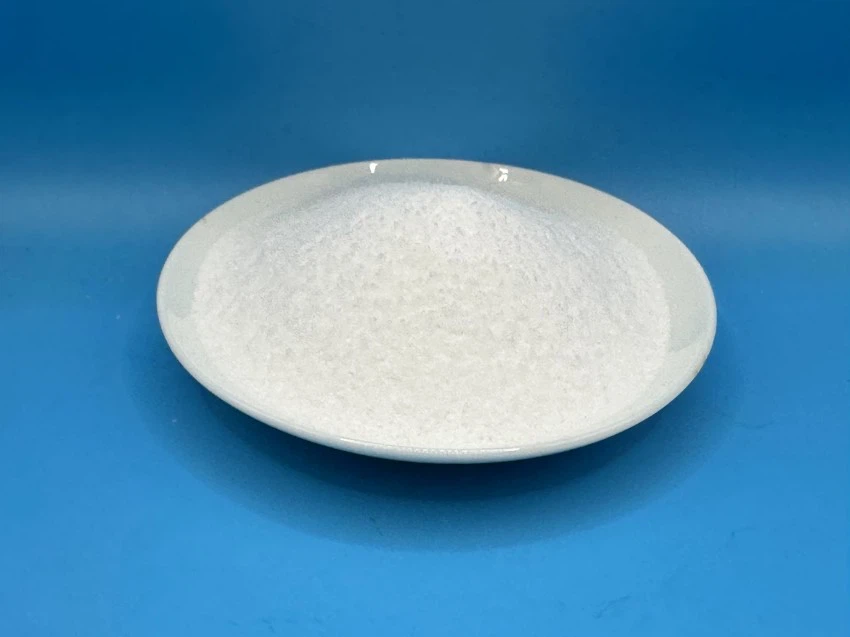
Cationic Polyacrylamide (CPAM) is a highly efficient flocculant widely used in municipal and industrial wastewater treatment, especially for sludge dewatering and solid-liquid separation. Due to its cationic properties, it can rapidly neutralize negatively charged particles, enabling effective flocculation and fast sedimentation. It helps solve common issues such as wastewater turbidity, difficult dewatering, and low treatment efficiency.
Compared with traditional flocculants, CPAM offers advantages such as low dosage, high treatment efficiency, and stable performance, making it an ideal choice for improving water treatment efficiency and reducing operating costs. As a high-performance wastewater treatment flocculant and polymer flocculant, Cationic Polyacrylamide (CPAM) is extensively applied in both municipal and industrial wastewater treatment fields.
Products Description
ECOLINK's Cationic Polyacrylamide (CPAM) is manufactured using high-quality acrylamide monomers through a mature and stable polymerization process on automated production lines. The company has a comprehensive quality control system in place, with strict testing carried out from raw material selection to final product delivery, ensuring consistent and stable performance for every batch. The product complies with international quality standards such as ISO, meeting the application requirements of different countries and industries while effectively reducing uncertainties in procurement and usage.
Cationic Polyacrylamide (CPAM) is a high molecular weight, positively charged, water-soluble synthetic polymer, mainly used as a flocculant in water treatment, sludge dewatering, and papermaking. It can effectively bind with negatively charged suspended particles to form large, fast-settling flocs, thereby accelerating solid-liquid separation in industrial and municipal wastewater.
As an efficient solid-liquid separation agent, CPAM can effectively interact with negatively charged suspended particles. Its unique properties promote floc growth, enhance sedimentation efficiency, and contribute to the production of high-quality treated water. By adding CPAM in the water treatment process, enterprises can improve treatment efficiency, reduce operational costs, and enhance water quality. This versatile solution ensures optimal performance and supports sustainable water resource management. Its distinctive characteristics as an industrial water treatment chemical further facilitate floc enlargement.
Product Parameter (specification)
|
Products |
Degree of Hydrolysis |
Molecular Weight |
Application |
|
Cationic PAM Powder |
Super Low |
Medium |
Paper wastewater |
|
Cationic PAM Powder |
Low |
Medium |
|
|
Cationic PAM Powder |
Low |
High |
|
|
Cationic PAM Powder |
Low |
High |
|
|
Cationic PAM Powder |
Medium Low |
High |
|
|
Cationic PAM Powder |
Medium |
High |
Municipal and industrial |
|
Cationic PAM Powder |
Medium |
High |
|
|
Cationic PAM Powder |
Medium |
High |
|
|
Cationic PAM Powder |
High |
High |
|
|
Cationic PAM Powder |
High |
Super high |
|
|
Cationic PAM Powder |
High |
Super High |
Municipal and industrial |
|
Cationic PAM Powder |
High |
Super high |
|
|
Cationic PAM Powder |
High |
Super high |
|
|
Cationic PAM Powder |
High |
Super high |
|
|
Cationic PAM Powder |
High |
Super high |
|
|
Cationic PAM Powder |
High |
Super High |
Retention and Drainage |
|
Cationic PAM Powder |
High |
Super High |
|
|
Cationic PAM Powder |
High |
Super High |
|
|
Cationic PAM Powder |
High |
Super High |
Product Features

Key Advantages of Cationic Polyacrylamide (CPAM)
- Excellent Flocculation Efficiency:Rapidly aggregates fine particles into larger flocs, accelerating sedimentation. Helps customers shorten treatment time, improve processing efficiency, and increase equipment utilization.
- Effective Sludge Dewatering:Reduces moisture content in sludge, lowering disposal costs and improving treatment performance. Helps customers reduce sludge volume as well as transportation and disposal costs.
- Wide pH Compatibility:Performs effectively across a broad pH range. Helps customers minimize the cost of frequent process adjustments and adapt to various complex water conditions.
- Environmentally Friendly and Safe:Non-toxic and biodegradable under recommended usage conditions. Helps customers comply with environmental regulations, reduce compliance risks, and meet discharge standards smoothly.
- Enhanced Filtration Performance: Improves filtration speed and reduces the need for secondary treatment chemicals. Helps customers shorten filtration time, lower additional chemical dosing, and further reduce operational costs.
Product Applications
CPAM is suitable for a wide range of industries, including:
Municipal Wastewater Treatment:Removes suspended solids in wastewater treatment plants and enhances sludge dewatering.
Recommended combination:CPAM + Polyaluminum Chloride (PAC). PAC is used for primary coagulation, while CPAM is used for subsequent flocculation and dewatering, forming a complete solution as a typical wastewater treatment flocculant application.
Pulp and Paper Industry:Used as a retention aid and drainage agent to improve paper quality and water reuse efficiency.
Recommended combination:CPAM (retention aid) + Anionic PAM. Products can be adjusted based on actual conditions, highlighting the critical role of cationic PAM in industrial applications.
Textile Industry:Assists in clarification and recovery of dye wastewater.
Recommended combination:CPAM + Decolorizing Agent + PAC for enhanced performance.
Chemical and Mining Industry:Helps separate solids and liquids in tailings and chemical wastewater.
Recommended combination:CPAM + Anionic PAM (adjusted according to ore type). Due to significant differences in water quality across mining sites, customized grades are required.
Food and Beverage Processing:Ensures cleaner water recycling and reduces treatment costs.
Recommended combination:CPAM + Food-grade PAC.

Production & Quality Assurance
ECOLINK's Cationic Polyacrylamide (CPAM) is produced using a mature and reliable polymerization process, with the entire procedure carried out in an automated system. From raw material feeding to final product packaging, every step is standardized and strictly controlled. Through precise adjustment of key reaction parameters, the product structure remains stable, minimizing performance fluctuations at the source.
In terms of quality control, we have established a multi-level inspection system, conducting rigorous testing on molecular weight, ionic degree, and purity to ensure every batch meets required standards. Unlike some suppliers who rely solely on final product inspection, we place greater emphasis on process control-ensuring that potential issues are identified and managed during production rather than after delivery.
By implementing full-process control instead of single-point inspection, we ensure long-term product stability and consistency. This allows customers to achieve more stable performance during use, reducing treatment risks caused by product variability. High batch consistency also minimizes the need for frequent adjustments, lowers operational costs, and provides greater confidence for long-term application.
Our High-quality Service
A. Direct supply from the source factory
As an actual factory with an annual production capacity of 300,000 tons, we offer you highly competitive prices and reliable delivery schedules.
B. Customized research and samples
The R&D team can customize exclusive products with specific molecular weight/concentration based on your source water quality and treatment goals. After confirming the indicators, we can provide samples for you to test first, and only after they are qualified, proceed with large-scale production.
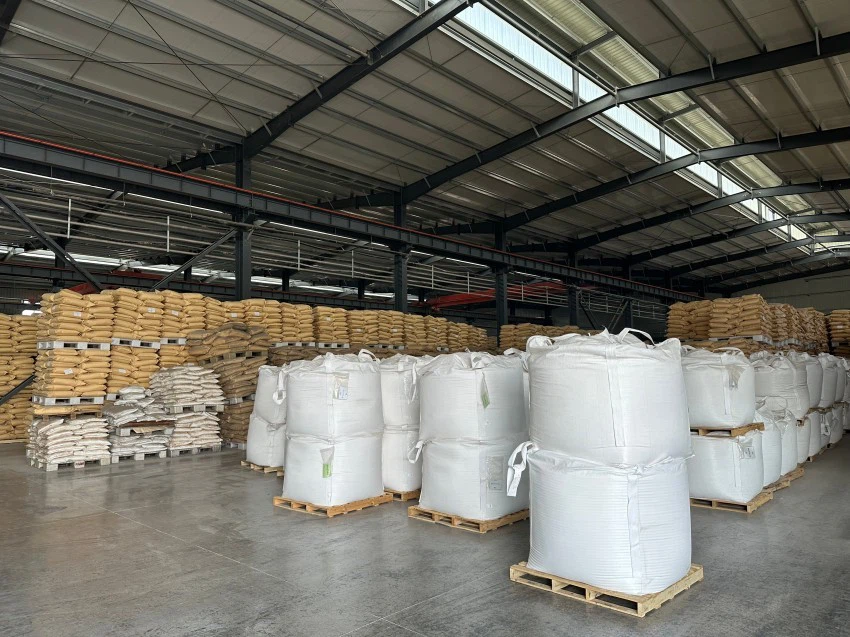
C. Strict quality control and packaging:
We have advanced production equipment and strict quality control. We also have a production enterprise equipped with heavy metal detection equipment to ensure that every step from raw materials to finished products complies with international standards such as NSF and ISO. Post-shipment inspection, laboratory testing of products before shipment. At the same time, we provide flexible customized packaging services to meet your local storage and transportation needs.
D. Innovation
Our experienced R&D team continuously develops innovative, customized ingredient solutions to meet the changing market demands.
E. One-stop global logistics:
From small trial orders to full ship charter, from negotiation, confirmation, production arrangement, booking, customs declaration to export documents, all are followed up by dedicated personnel to ensure professional and efficient order processing. Support shipping by sea, air, and land to any port worldwide.
F. Full-process technical support:
Regarding customers' concerns about "not knowing how to use, incorrect ratios", we provide free comprehensive technical guidance. This includes the best ratio schemes for different water sources, correct dissolution steps, and the addition sequence when using multiple chemicals together. What you purchase is not only the product, but also a customized treatment solution to ensure effectiveness.
Instructions for Use
When using this product, the solution concentration should be maintained between 0.1% and 0.2%. If there is no dedicated dissolving unit or dosing system available, a dissolution and dilution tank should be installed. The product should be dosed using a screw pump, and the dosage should be adjusted according to actual operating conditions.
Frequently Asked Questions (FAQ)
Q: 1. Can cationic and anionic polyacrylamide be mixed together?
A: No, they cannot be mixed directly. When cationic and anionic polyacrylamide come into contact in water, charge neutralization occurs, producing white flocculent precipitates that render both products ineffective. If both need to be used in the same system, they should be added separately with adequate spacing (such as in different process stages or equipment), or a spacer fluid should be used.
Q: 2. Why does the prepared solution sometimes experience viscosity loss?
A: Viscosity loss is typically caused by: excessively high dissolution water temperature (above 50°C) leading to thermal degradation; overly rapid stirring (above 500 rpm) causing shear degradation; prolonged storage after preparation (over 24 hours); presence of strong oxidants or high concentrations of metal ions in the water. It is recommended to use room temperature clean water, control stirring speed, and prepare solution as needed.
Q: 3. How to use the product in low winter temperatures?
A: When water temperatures are low in winter, CPAM dissolution rate significantly decreases. Recommended measures: extend stirring time to 90-120 minutes; use warm water (not exceeding 40°C) for preparation; pre-warm the product indoors before use; consider using emulsion-type products, which offer better low-temperature dissolution performance.
Q: 4. How to determine if CPAM selection is appropriate for sludge treatment?
A: Appropriate selection can be assessed by: moderate floc size, dense structure, clear supernatant, low cake moisture content, no filter cloth clogging, clear filtrate, low filtrate solids content, and stable filtration cycle. If flocs are too small or supernatant is turbid, ionic degree may be too low; if flocs are too large but loose, molecular weight may be too high; if filter cloth clogs severely, ionic degree may be too high.
Q: 5. Is CPAM safe for use in drinking water treatment?
A: CPAM used for drinking water treatment must meet national drinking water treatment chemical standards, with residual monomer content ≤0.05%. Our product strictly controls acrylamide monomer residue and undergoes regular third-party testing to ensure compliance with relevant health and safety requirements. Recommended dosage should be strictly followed to avoid overdosing.
Q: 6. How to evaluate the quality of CPAM products?
A: High-quality CPAM features: white appearance, uniform granules, good flowability; fast dissolution, no "fish eyes" or undissolved particles; transparent or slightly turbid 1% solution without layering; during flocculation testing, rapid floc formation, dense structure, fast sedimentation; clear supernatant. Low-quality products exhibit slow dissolution, severe clumping, loose flocs, and turbid supernatant.
Q: 7. Can the product be used if it has absorbed moisture and clumped?
A: If clumping is minor and the product can still be crushed and dispersed, and after dissolution performance testing shows no significant decline, it may still be usable. If clumping is severe, product has yellowed, developed odor, or shows significant insoluble matter after dissolution, the product has deteriorated and should not be used. Strict moisture protection during storage is recommended, and opened packages should be used promptly.
Q: 8. Does CPAM affect microorganisms in wastewater treatment systems?
A: At recommended dosages, CPAM has minimal toxic effects on microorganisms in activated sludge. At excessive dosages, the polymer may encapsulate microorganisms, affecting their metabolic activity. Optimal dosage should be determined through jar testing to avoid overdosing. CPAM is biodegradable, and its degradation products have no adverse effects on subsequent biological treatment processes.
Q: 9. Can CPAM be used in combination with Polyaluminum Chloride (PAC)?
A: Yes. CPAM and PAC exhibit good synergistic effects when used together, significantly improving treatment performance while reducing overall chemical costs. Recommended addition sequence: add PAC first with rapid mixing to destabilize colloids; then add CPAM with slow mixing to promote floc growth. Optimal ratios and addition sequences should be determined through jar testing.
Q: 10. How to measure the concentration of CPAM solution?
A: The starch-cadmium iodide colorimetric method can be used to measure polyacrylamide concentration, suitable for low-concentration solutions. For field applications, viscosity method provides rapid estimation-under constant temperature, solution viscosity correlates positively with concentration. The gravimetric method offers precise measurement: dry a measured solution volume to constant weight and calculate solid content.
Q: 11. What precautions should be taken when using CPAM in high-temperature environments?
A: When temperatures exceed 60°C, CPAM molecular chains are susceptible to thermal degradation, resulting in viscosity loss and reduced flocculation performance. Recommendations: avoid direct addition at high-temperature stages; select temperature-resistant products for high-temperature applications; minimize storage time after solution preparation; control stirring speed to reduce shear degradation.
Q: 12. How to store the product after opening the package?
A: Opened packages should be used promptly, and remaining product should be sealed for storage. Seal the bag tightly or transfer to airtight containers, store in a cool, dry place, avoiding prolonged air exposure that may cause moisture absorption. It is recommended to purchase according to actual usage needs to avoid prolonged storage of opened packages.

CTA
If you are looking for an efficient, stable, and cost-effective water treatment solution, ECOLINK Cationic Polyacrylamide (CPAM) is your ideal choice. Contact us today to get free samples, professional product selection support, and customized solutions to help your operations achieve higher efficiency and stability.
Hot Tags: cationic flocculant, China cationic flocculant manufacturers, suppliers, factory, Water Shutoff Polymer, Biosolids Dewatering Polymer, First pass retention FPR improvement chemical, Cationic Coagulant, Clay Stabilizer, Non ionic Polyacrylamide CAS 9003 05 8