Mining Wastewater Treatment Solutions with Advanced Polyacrylamide Flocculation Technology
With the global development of the mining industry, the treatment of wastewater generated during mining production has attracted increasing attention. Different types of mines-such as copper, coal, gold, and polymetallic mines-exhibit distinct wastewater compositions, and therefore cannot adopt identical treatment processes.
ECOLINK TECHNOLOGY focuses on industrial water treatment chemicals and water treatment system solutions, providing one-stop services including flocculants, water treatment chemicals, and wastewater treatment equipment for mines, mineral processing plants, and industrial enterprises. Through targeted process design, we help customers reduce sludge disposal costs and increase the rate of water recycling and reuse.
I. Main Sources and Pollution Characteristics of Mining Wastewater
The primary sources of mining wastewater include:
Pit Drainage: Groundwater and production wastewater that accumulate over time in open-pit or underground mining areas.
Tailings Pond Return Water: Wastewater containing high concentrations of solid particles generated during ore crushing, grinding, and mineral processing.
Processing Plant Process Wastewater: Recirculating water produced during production stages such as flotation, gravity separation, and leaching.
Rainwater Runoff from Ore and Waste Rock Dumps: Rainwater passing through ore storage areas, carrying large amounts of suspended solids and dissolved pollutants.
Due to differences in ore types, production processes, and local hydrological conditions, the wastewater characteristics of every mining project vary. For instance, Acid Mine Drainage (AMD) typically contains high concentrations of iron, aluminum, and other heavy metal ions, whereas mineral processing wastewater usually exhibits high turbidity and abundant suspended solids.
Therefore, when designing a mining wastewater treatment scheme, it is necessary to first conduct a water quality analysis before determining the optimal chemical types and equipment combination.
II. Key Pollutants to Control in Mining Wastewater Treatment
1. Heavy Metal Pollution
Common heavy metals in mining wastewater include:
Arsenic (As)
Lead (Pb)
Zinc (Zn)
Cadmium (Cd)
Copper (Cu)
Mercury (Hg)
Even at low concentrations, these metals can impact the ecological environment.
Typically, by adjusting the pH value, metals are precipitated as hydroxides, and flocculation technology is then utilized to promote particle aggregation and improve settling efficiency.
2. Acid Mine Drainage (AMD)
Acid Mine Drainage is one of the more complex issues in mining wastewater treatment.
When sulfide minerals such as pyrite come into contact with air and water, sulfuric acid is produced, lowering the wastewater pH and promoting the dissolution of more metals.
The typical treatment process flow is as follows:
Acidic Wastewater → Lime or Limestone Neutralization → pH Adjusted to 8–10 → Metal Hydroxide Precipitate Formation → Flocculation Settling and Solid-Liquid Separation
Because the formed metal hydroxide particles are usually fine and settle slowly by gravity alone, an appropriate polymer must be added to enhance settling performance.
III. Standard Mining Wastewater Treatment Process
A complete mining wastewater treatment system usually comprises:
1. Pretreatment Stage
Primary Objectives:
Adjust pH
Reduce dissolved metal concentrations
Improve downstream treatment conditions
Common Methods:
Lime adjustment
Limestone neutralization
Automatic pH control systems
2. Coagulation and Flocculation Stage
This is the critical step in the entire solid-liquid separation process.
By adding suitable flocculants, microscopic suspended particles aggregate into larger flocs, increasing the settling velocity.
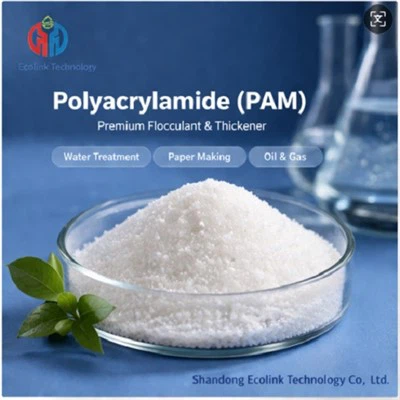
Polyacrylamide (PAM) is a high-molecular-weight flocculant material widely used in mining wastewater treatment. It forms dense flocs from fine particles through molecular chain bridging.
In practical applications, the appropriate model needs to be selected based on:
Wastewater pH
Mineral composition
Solid concentration
Particle size distribution
IV. The Role of PAM in Solid-Liquid Separation of Mining Wastewater
In the mining industry, PAM is primarily used for:
Tailings thickening
Sludge dewatering
Clarifier tank settling
Process water recycling treatment
Proper selection of chemicals can improve:
Floc size
Settling rate
Underflow concentration
Effluent clarity
Compared to relying solely on natural gravity settling, adding an appropriate dosage of flocculant significantly enhances separation efficiency.
For acid mine drainage treated with lime, anionic products generally exhibit better performance because mineral particles typically carry a negative charge under pH 6.5–10 conditions, allowing stable flocs to form via adsorption and chain bridging.
For low-pH process water or systems with high calcium and magnesium ion concentrations, experimental screening is required to select a more suitable model.

V. How to Choose the Right PAM Model for Mining Wastewater Treatment?
During mining wastewater treatment, the choice of PAM (Polyacrylamide) directly affects flocculation performance, sludge settling behavior, and subsequent water reuse efficiency.
Because wastewater properties vary greatly across different mining projects, chemical models cannot be determined simply based on industry rule-of-thumb. Professional selection typically requires combining laboratory testing, including Jar Tests, settling rate tests, and sludge dewatering tests.
Based on water quality parameters provided by customers, ECOLINK TECHNOLOGY assists with chemical screening to deliver tailored mining flocculant solutions for mining clients.
1. Application Characteristics of Anionic PAM
Anionic Polyacrylamide is one of the most widely used types of flocculants in mining wastewater treatment.
Mainly applicable to:
Tailings wastewater treatment
Mineral processing wastewater
Slurry thickening
Metal hydroxide precipitate separation
In mining wastewater adjusted with lime, the pH typically falls within the range of 6.5–10, where mineral particles generally carry negative charges.
Anionic PAM adsorbs particles via polymer chains and utilizes bridging action between molecular chains to combine micro-particles, forming:
Larger floc structures
Faster settling speeds
A clearer mud-water interface
Consequently, Anionic Polyacrylamide Flocculant is frequently used in mining thickeners, sedimentation tanks, and tailings treatment systems.
2. Application Scenarios for Nonionic PAM
For certain acidic process waters with a pH below 5, the anionic charge effect may be impaired.
In such cases, Nonionic Polyacrylamide may be more suitable.
Typical applications include:
Acid Mine Drainage
Wastewater with high calcium and magnesium ion contents
Special mineral processing flows
Nonionic PAM relies primarily on molecular chain entanglement and adsorption to promote particle aggregation, offering superior stability under certain complex water quality conditions.
VI. Laboratory Testing Methods for PAM Flocculants (Jar Test)
To ensure final performance in practical application, clients are advised to perform experimental verification prior to full-scale dosing.
Below is a typical PAM test procedure for mining wastewater:
Experimental Preparation
Prepare Equipment:
Beakers (500 mL or 1000 mL)
Stirring apparatus
Pipettes
Stopwatch
Samples of various PAM models
Prepare PAM solutions of different concentrations.
General recommendation:
PAM working solution concentration: 0.05%–0.2%
Example: Take 1 g of PAM product and add it to 1000 mL of clean water. Stir thoroughly until fully dissolved to form the test stock solution.
Experimental Steps
Step 1: Raw Water Analysis
Test baseline parameters of the mining wastewater:
pH value
Turbidity
SS (Suspended Solids)
Solid concentration
Metal ion content (if needed)
Determine the initial chemical selection direction through water quality analysis.
Step 2: Prepare Different PAM Concentrations
Example:
Sample A: 0.05% PAM solution
Sample B: 0.1% PAM solution
Sample C: 0.2% PAM solution
Add each into equal volumes of wastewater for comparison.
Step 3: Rapid Mixing
Add PAM and stir rapidly to disperse the chemical fully.
Purpose:
Promote contact between PAM molecules and particles
Avoid localized over-concentration of the chemical
Step 4: Slow Stirring & Floc Observation
Reduce stirring speed to allow flocs to form gradually.
Observe:
Floc size
Floc strength
Settling velocity
Supernatant clarity
Step 5: Determine Optimal Dosage
Optimal PAM conditions generally display:
Large and dense flocs
Rapid settling velocity
Clear supernatant
Reduced sludge moisture content
Note: Higher PAM dosage does not always yield better performance. Excessive dosing may cause:
Colloidal re-stabilization
Chemical waste
Increased sludge disposal costs
Therefore, the optimal dosage must be established through empirical testing.
VII. Optimizing Thickener Performance with PAM to Increase Mining Water Recycling Rates
Thickeners are essential solid-liquid separation equipment in mineral processing.
Key functions:
Increase underflow solid concentration
Improve overflow water quality
Recycle process water
If a thickener operates inefficiently, the following issues may occur:
Insufficient underflow concentration
Fine particles entering the overflow
Increased load on downstream filtration
Elevated fresh water consumption
By properly utilizing Mining Flocculant, larger and tighter floc structures can be promoted, causing solid particles to settle rapidly.
Optimized thickening processes can:
Improve sludge compaction performance: The polymer network formed by PAM helps particles combine, increasing sludge density after settling.
Improve the mud-water interface: Effective flocculation creates a distinct line between mud and water, enhancing equipment operational stability.
Increase recirculating water utilization efficiency: Superior solid-liquid separation means more clarified water can return to the production process.
VIII. Key Value of Solid-Liquid Separation Technology in Mining Wastewater Treatment
Solid-liquid separation is the core step in mining wastewater treatment systems.
Effective solid-liquid separation can:
Reduce suspended solids concentration in wastewater
Relieve downstream processing burden
Lower sludge transportation and disposal costs
Improve water resource recovery efficiency
Common solid-liquid separation methods include:
1. Gravitational Settling
Uses the particle's own gravity to achieve separation.
Pros: Low energy consumption, simple operation
Cons: Limited effectiveness on fine particles
2. Filtration
Uses filter cloth, membrane materials, etc., to intercept solid particles.
Applicable to: Fine treatment, high-purity recycled water production
3. Centrifugal Separation
Utilizes high-speed rotation to generate centrifugal force.
Applicable to: High-concentration sludge, fine particle separation
4. PAM-Assisted Flocculation Separation
By adding Polyacrylamide, microscopic particles are aggregated into larger flocs.
Widely applied in: Industrial wastewater treatment, mine tailings treatment, sludge dewatering systems
IX. Optimizing Mining Wastewater Reuse with PAM for Sustainable Water Management
As the global mining industry moves toward greener and lower-carbon practices, the goal of mining wastewater treatment is no longer just meeting discharge standards, but more importantly achieving water recycling and reducing fresh water consumption during production.
Traditional mining production usually requires vast amounts of process water for tasks such as:
Ore crushing and grinding
Flotation operations
Equipment cooling
Tailings transport
If wastewater is discharged directly without effective treatment, it not only poses environmental risks but also increases ongoing water procurement costs for the enterprise.
By combining PAM flocculation technology, solid-liquid separation equipment, and advanced treatment processes, high-efficiency recycling of mining wastewater can be realized.
Utilizing a PAM-based mining wastewater treatment plan alongside thickening, filtration, and membrane treatment technologies, certain mining projects can achieve a process water recovery rate exceeding 90%, reusing water in production stages like flotation, equipment cooling, and dust suppression.
X. Advanced Mining Wastewater Treatment & Water Reuse Process
A complete mine water recycling system typically includes the following stages:
Stage 1: Pretreatment & Pollutant Removal
Primary Objectives:
Adjust pH
Remove heavy metals
Reduce suspended solids concentration
Common Methods:
Chemical neutralization
Coagulation sedimentation
PAM-assisted flocculation
During this stage, PAM primarily helps fine particles aggregate rapidly, boosting downstream solid-liquid separation efficiency.
Stage 2: Thickening & Sludge Dewatering
After flocculation, wastewater enters:
Thickening tanks
Clarifier tanks
Filter press equipment
Centrifugal dewatering equipment
By optimizing PAM dosing conditions, it is possible to:
Increase sludge settling rate
Lower sludge moisture content
Reduce sludge transport volume
Improving sludge dewatering performance not only lowers treatment costs but also benefits downstream solid waste resource management.
Stage 3: Advanced Treatment & Reuse
Based on the customer's water quality requirements, additional systems can be configured:
Ultrafiltration (UF)
Nanofiltration (NF)
Reverse Osmosis (RO)
EDI systems
Used to remove:
Dissolved salts
Trace metals
Residual pollutants
Ultimately achieving closed-loop recycling of production water.
XI. Precautions for Using PAM in Mining Wastewater Treatment
Although PAM exhibits excellent flocculation performance, actual application results depend on multiple factors.
1. Impact of Water Quality Fluctuations
Mining wastewater composition may change due to:
Seasonal changes
Ore type variations
Production process adjustments
Therefore, regular water testing and adjustments to the PAM model and dosage are required.
2. Impact of Dissolution Methods
PAM is a high-molecular-weight polymer, making correct dissolution crucial.
Recommendations:
Use clean water for dissolution
Avoid high-speed, prolonged shearing
Ensure sufficient aging time
Incorrect dissolution methods may lead to:
Molecular chain breakage
Decreased flocculation performance
Increased chemical consumption
3. Impact of Dosing Location
Selecting an appropriate dosing point enhances chemical efficiency.
Generally recommended: PAM solution injection points:
Well-mixed areas
Front of the flocculation reaction zone
Feed zone of thickening equipment
Avoid dosing directly upstream of high-shear pumps, as this can break the formed flocs.
XII. ECOLINK TECHNOLOGY Mining Wastewater Treatment Solutions
As a professional water treatment solution provider, ECOLINK TECHNOLOGY not only supplies high-performance PAM products but also delivers comprehensive technical support tailored to customers' practical application needs.
Our services include:
1. Water Sample Analysis & Chemical Screening
Based on wastewater samples provided by customers, we analyze:
SS content
Turbidity
pH range
Sludge properties
Determining the most suitable PAM type through lab testing.
2. PAM Product Supply
ECOLINK TECHNOLOGY provides:
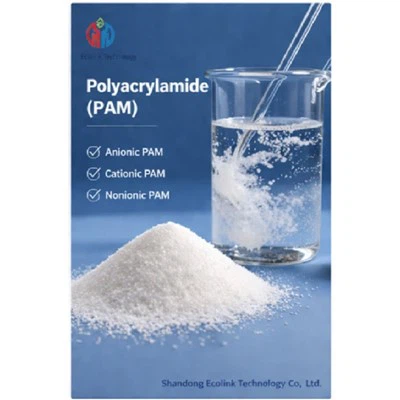
Anionic PAM (Anionic Polyacrylamide)
Cationic PAM (Cationic Polyacrylamide)
Nonionic PAM (Nonionic Polyacrylamide)
Suitable for:
Mining wastewater treatment
Sludge dewatering
Industrial wastewater treatment
Municipal sewage treatment
3. One-Stop Water Treatment Equipment Solutions
In addition to water treatment chemicals, ECOLINK TECHNOLOGY offers:
Industrial wastewater treatment equipment
Sewage treatment equipment
Water reuse systems
Desalination equipment
Helping customers achieve integrated solutions from chemical selection to complete engineering systems.

XIII. Case Verification Process: How to Determine the Optimal PAM Scheme?
To guarantee field application results, the following technical verification process is recommended:
Step 1: Collect On-Site Customer Data
Including:
Raw water quality report
Production process flow
Existing treatment equipment
Target effluent requirements
Step 2: Laboratory Screening
Test different PAM models for:
Flocculation efficacy
Settling speed comparison
Supernatant observation
Sludge dewatering performance
Step 3: On-Site Pilot Testing
Verify results in the actual system based on laboratory findings.
Focus areas:
Chemical consumption rate
Sludge blanket height changes
Effluent SS metrics
Sludge moisture content
Step 4: Optimize Operational Parameters
Finally establish:
PAM model
Dosing concentration
Dosing point
Operating conditions
Formulating a stable, efficient mining wastewater treatment plan.
XIV. Future Trends in Mining Wastewater Treatment
Future mining water treatment technologies will place greater emphasis on:
Intelligent Management
Utilizing automatic monitoring systems to achieve:
Online water quality analysis
Automated chemical dosing control
Operational data optimization
Low-Consumption Technologies
By optimizing PAM molecular structures, improve:
Flocculation efficiency
Processing capacity per unit of chemical
Sludge dewatering efficiency
Reducing overall operational costs.
Zero Liquid Discharge (ZLD)
For water-scarce regions or mining projects with strict environmental requirements, Zero Liquid Discharge (ZLD) systems are becoming a key direction.
Through:
Thickening
Membrane processes
Evaporation & crystallization
Further boosting water recovery rates to maximize resource utilization.
Conclusion
Mining wastewater treatment is a comprehensive engineering discipline involving water chemistry, solid-liquid separation, and resource recycling.
Selecting the right PAM flocculant, combined with scientific testing methods and proper treatment equipment, can effectively improve:
Suspended solids removal efficiency
Sludge dewatering performance
Process water recovery rates
Overall operating costs
ECOLINK TECHNOLOGY is committed to providing global mining customers with professional Polyacrylamide (PAM) products and complete water treatment solutions, assisting clients through technical support to reach more efficient, environmentally friendly, and economical water resource management goals.