Efficient Sludge Dewatering Equipment Helps Enterprises Achieve Low-Cost, Eco-Friendly Sludge Management
In modern industrial production and municipal wastewater treatment processes, sludge treatment has become a crucial link affecting operating costs and environmental management. Because sludge usually contains a large amount of water, direct transportation or disposal without effective treatment will not only increase transportation weight and occupy storage space, but also raise overall treatment expenses.
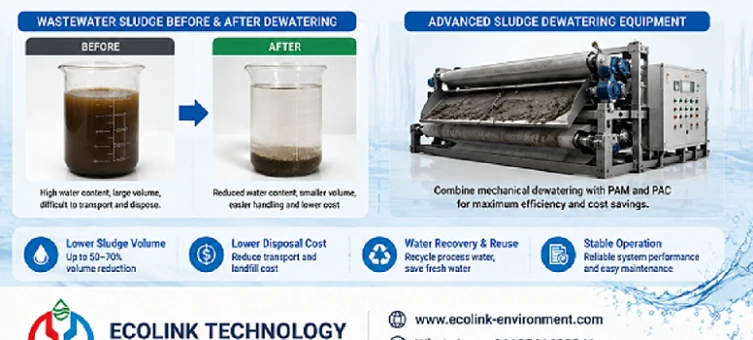
By adopting advanced sludge dewatering equipment, excess moisture in the sludge can be effectively removed, reducing sludge volume and weight, making subsequent transportation, storage, and resource utilization more efficient. For industrial enterprises, municipal wastewater treatment plants, and environmental engineering projects, optimizing sludge treatment processes not only reduces operational pressure but also complies with current requirements for green environmental protection and sustainable development.
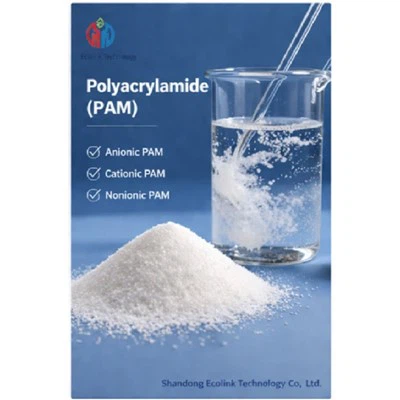
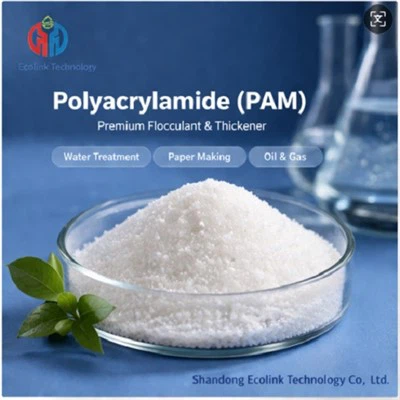
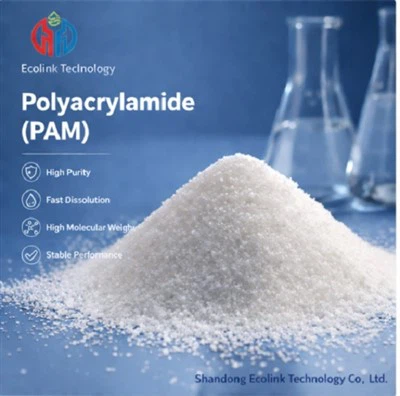
ECOLINK TECHNOLOGY focuses on the field of water treatment, providing customers with comprehensive solutions including sludge treatment technology, wastewater treatment equipment, and chemical agent(polyacrylamide and polyaluminium chloride) applications, helping various types of enterprises improve sludge management efficiency and achieve a balance between economic and environmental benefits.
1. Why Does High Sludge Water Content Increase Treatment Costs?
Sludge is a solid by-product generated during the wastewater treatment process, which contains a large amount of water. High moisture content directly increases sludge weight, forcing transport vehicles to carry more ineffective water, while increasing transportation frequency and fuel consumption.
For example, without sufficient dewatering, a large amount of wet sludge requires more transport space while increasing pressure on storage facilities. When sludge undergoes effective dewatering treatment, the overall volume is significantly reduced, which can reduce transport trips, lower logistics expenses, and reduce energy consumption during transportation.
From an economic perspective, reducing sludge water content is one of the important measures to control sludge disposal costs. For industrial enterprises and municipal wastewater treatment plants that generate large amounts of sludge every day, optimizing sludge dewatering processes during long-term operation can bring continuous cost savings.
Main ways sludge dewatering reduces costs:
Reduce sludge transport weight and improve transportation efficiency;
Lower vehicle usage frequency and fuel consumption;
Reduce sludge storage space requirements;
Lower energy consumption in subsequent treatment processes.
Therefore, proper configuration of sludge dewatering equipment not only improves sludge treatment efficiency, but also helps enterprises build a more economical and efficient sludge management system.
2. How Does Reducing Moisture Content Improve Sludge Transportation and Storage?
Moisture in sludge not only adds weight, but also affects stability during transportation. High-moisture sludge typically exhibits high fluidity and low stability, making it prone to leakage and spillage during transport, which increases operational risks.
Dewatered sludge has a more stable structure and is easier to handle mechanically and manage centrally. By reducing free water in the sludge, transportation becomes safer while reducing the likelihood of affecting transport equipment and the surrounding environment.
For wastewater treatment facilities operating around urban areas, reducing environmental risks during transportation is particularly important. Through reasonable application of sludge dewatering systems, the safety and controllability of the entire sludge treatment process can be improved.
3. Important Role of Sludge Dewatering in Environmental Protection
If wet sludge that has not been adequately treated leaks, it may impact soil, water bodies, and the surrounding ecosystem. At the same time, high-moisture environments easily promote microbial activity, leading to increased odors and gas emissions.
Effective sludge dewatering treatment can reduce the water content in sludge, making it more stable and reducing environmental risks during storage and transportation. In addition, lowering water content slows down certain biodegradation processes, helping to improve the environment of working areas and surrounding communities.
Against the backdrop of continuously rising environmental regulations, enterprises adopting more advanced sludge treatment technologies can not only reduce potential environmental issues, but also help improve their green operation standards.
ECOLINK TECHNOLOGY combines mechanical separation technology with scientific treatment solutions to provide customers with more reliable wastewater treatment solutions, helping clients achieve sludge reduction and stabilization management.
4. Improving Sludge Dewatering Efficiency Through Technological Optimization
Combining Mechanical Dewatering with Chemical Agents to Achieve More Stable Sludge Treatment Results
To improve sludge treatment efficiency, modern wastewater treatment projects typically adopt mechanical dewatering methods to effectively separate moisture from solid particles in sludge. Common methods include centrifuges, belt filter presses, and plate and frame filter presses.
Different types of sludge have different water retention characteristics and particle structures; therefore, appropriate treatment processes must be selected according to sludge properties. Proper configuration of sludge dewatering systems can improve solid-liquid separation efficiency, making the final dewatered sludge more stable and more convenient for subsequent transport and disposal.
In practical applications, relying solely on mechanical equipment sometimes makes it difficult to achieve ideal separation effects. Therefore, combining chemical agents such as flocculants can promote the formation of larger flocs between fine sludge particles, improving filtration performance.
By combining mechanical equipment with chemical treatment technologies, overall dewatering efficiency can be improved without significantly altering existing infrastructure, providing industrial enterprises and municipal wastewater treatment plants with more economical and reliable solutions.
5. Role of Flocculants in the Sludge Dewatering Process
Fine particles in sludge usually possess strong stability; performing direct solid-liquid separation can easily affect dewatering results. Adding an appropriate amount of flocculants can help micro-particles aggregate to form larger sludge flocs, making it easier for moisture to be released from the sludge structure.
During the sludge dewatering process, reasonable selection of flocculant type and dosage is a key factor affecting final dewatering performance.
Main influencing factors include:
Sludge source and pollutant composition;
Sludge particle size and surface properties;
Flocculant type and application concentration;
Dewatering equipment operating parameters.
Scientifically adjusting chemical agents and equipment operating conditions can reduce sludge moisture content, improve sludge dewatering efficiency, and simultaneously reduce pressure on subsequent transportation and disposal.
ECOLINK TECHNOLOGY provides water treatment chemicals and technical support tailored to different application scenarios, helping customers optimize sludge treatment processes and achieve more efficient sludge reduction management.
6. How Dewatered Sludge Supports Subsequent Treatment and Resource Utilization?
Sludge dewatering not only lowers transportation and disposal costs, but also creates better conditions for subsequent treatment processes.
Sludge that has undergone effective dewatering is better suited to enter subsequent treatment links, such as:
1. Sludge Drying Treatment
After reducing sludge moisture content, energy required for subsequent drying processes decreases, lowering overall operating costs and improving processing efficiency.
2. Incineration Treatment
Dewatered sludge has lower water content, which reduces energy consumed during combustion for evaporating moisture, improving energy utilization efficiency.
3. Composting and Resource Utilization
Dewatered sludge that has undergone stabilization treatment can be further applied in composting or other resource utilization methods. Under compliance with relevant standards, it can be used as soil amendment material to achieve waste resource utilization.
Therefore, efficient sludge dewatering equipment is not only a technical means to reduce waste volume, but also an important foundation for promoting circular resource utilization of sludge.
7. Environmental Value Brought by Water Resource Recovery and Reuse
Water separated during the sludge dewatering process can usually be reused in production or wastewater treatment processes after further treatment.
By recycling and reusing a portion of water resources, reliance on fresh water resources can be reduced, improving overall water resource utilization efficiency.
For industrial enterprises, adopting comprehensive sludge treatment technologies can not only reduce sludge disposal pressure, but also promote corporate water-saving management and green production.
Under compliance with local environmental regulations, treated recycled water can be used for industrial production, equipment washing, or other suitable purposes, thereby further lowering corporate operational costs.
8. Daily Operational Management Determines Sludge Dewatering Effects
In addition to equipment and chemical selection, daily operational management similarly affects sludge dewatering outcomes.
To ensure long-term stable operation of the sludge dewatering system, key attention should be paid to the following aspects:
1. Regularly Check Equipment Operating Status
Timely maintenance of key components such as centrifuges and filter press equipment can reduce equipment failures and improve operational continuity.
2. Monitor Changes in Sludge Properties
Sludge properties generated in different seasons or production stages may change; operating parameters need to be adjusted based on actual conditions.
3. Optimize Flocculant Dosage
Reasonably controlling chemical dosage ratios can avoid chemical waste while maintaining stable dewatering performance.
4. Strengthen Operator Training
Professional personnel can promptly identify abnormal conditions and quickly adjust process parameters to improve overall operational efficiency.
Through scientific management and continuous optimization, enterprises can obtain more stable sludge treatment results and achieve long-term operating cost control.
9. Comparative Analysis of Wet Sludge vs. Dewatered Sludge
How Does Sludge Dewatering Help Enterprises Reduce Long-Term Operational Pressure?
In traditional sludge management, untreated wet sludge usually contains a high proportion of moisture, which not only increases transportation and storage difficulty, but also elevates subsequent treatment costs.
By applying advanced sludge dewatering technology, sludge moisture content can be effectively reduced, making sludge more stable and easier to transport and process.
Below are the main differences between wet sludge and dewatered sludge in practical application:
| Comparison Item | Wet Sludge | Dewatered Sludge | Optimization Effect |
| Transport Volume | Higher | Significantly Reduced | Reduces transport frequency and lowers fuel consumption |
| Storage Space | Larger Requirement | Occupies Less Space | Improves facility utilization efficiency |
| Operational Stability | High fluidity, lower stability | More stable structure | Enhances operational safety |
| Odor & Gas Generation | More obvious | Effectively reduced | Improves working environment |
| Subsequent Processing Energy Consumption | Higher | Reduced | Lowers energy consumption |
Through the above comparison, it can be seen that reducing sludge moisture content not only alleviates logistics pressure, but also improves overall sludge management efficiency.
For industrial enterprises generating large amounts of sludge daily, selecting appropriate sludge dewatering equipment is an important measure to achieve sludge reduction and lower operating costs.

10. Economic Benefits Brought by Sludge Dewatering
How to Reduce Sludge Disposal Costs?
Sludge treatment costs are usually closely related to transport distance, sludge weight, storage space, and final disposal methods.
When sludge water content is high, a large portion of transportation fees is actually spent on transporting water. Reducing weight and volume through sludge dewatering treatment can reduce the number of transport vehicle trips while easing pressure on storage facilities.
In the long run, adopting efficient sludge treatment technologies can help enterprises:
Reduce off-site sludge transportation expenses;
Lower construction demand for storage areas;
Reduce energy consumption in subsequent drying and processing;
Improve sludge management efficiency.
Therefore, industrial sludge dewatering solutions focus not only on single-equipment performance, but also require comprehensive design combining sludge characteristics, treatment scale, and actual enterprise operational needs.
ECOLINK TECHNOLOGY is committed to providing customers with professional water treatment solutions, helping clients build a more economical and efficient sludge treatment system through equipment, chemicals, and process optimization.
11. Crucial Significance of Sludge Dewatering for Environmental Compliance
With global environmental regulations continuously becoming stricter, enterprises must pay greater attention to environmental impacts during sludge treatment.
After reducing sludge moisture content, leakage risks during transportation and storage are lowered, making it easier to meet environmental management requirements.
At the same time, effectively treated sludge is more stable, reducing odor release and potential environmental pollution issues.
For industrial enterprises and municipal wastewater treatment plants, adopting scientific sludge water removal technology can not only reduce environmental risks, but also enhance corporate green image.
Through rational planning of sludge treatment processes, enterprises can meet regulatory requirements while simultaneously improving resource utilization efficiency and optimizing operating costs.
12. Automation Technology Enhances Sludge Dewatering System Stability
Modern wastewater treatment projects increasingly emphasize intelligent management.
By installing online monitoring equipment, changes in sludge properties and equipment operating status can be understood in real time, and operating parameters can be adjusted in a timely manner.
Automated management can help enterprises:
Improve sludge dewatering efficiency;
Reduce manual operation errors;
Optimize flocculant dosage;
Lower energy consumption;
Enhance system operating stability.
Combining intelligent control technology with traditional sludge treatment processes can further improve the reliability of sludge dewatering systems, enabling enterprises to achieve more stable long-term operational results.
13. ECOLINK TECHNOLOGY Provides Professional Sludge Treatment Solutions
Sludge dewatering is not merely a simple solid-liquid separation process, but an important integral part of modern environmental management systems.
An efficient sludge treatment system requires comprehensive consideration of:
Sludge source and characteristics;
Treatment scale;
Equipment selection;
Flocculant matching;
Subsequent disposal methods.
ECOLINK TECHNOLOGY focuses on the field of environmental water treatment, providing comprehensive wastewater treatment solutions for industrial, municipal, and other industry clients.
By combining sludge dewatering equipment, professional flocculant applications, and process optimization services, ECOLINK TECHNOLOGY helps customers achieve:
Sludge volume reduction;
Lower transport costs;
Reduced environmental risks;
Improved resource utilization efficiency.
Whether in industrial wastewater treatment, municipal sewage treatment, or sludge reduction projects, rational technical solutions can help enterprises achieve more sustainable development goals.
Conclusion: Sludge Dewatering is a Key Step to Achieving Green Sludge Management
Sludge dewatering can effectively reduce water content in sludge, alleviate transportation and disposal pressures, and lower environmental impacts.
By combining mechanical equipment, flocculants, and scientific operational management, enterprises can obtain more stable and efficient sludge treatment results.
In the future, as environmental protection requirements continue to rise, adopting advanced sludge dewatering technology will become an important direction for enterprises to lower costs and increase resource utilization efficiency.
ECOLINK TECHNOLOGY will continue to provide reliable wastewater treatment solutions to global customers, helping enterprises achieve more eco-friendly, efficient, and sustainable sludge management.