
Hey there! As a supplier of Industrial Water Purifiers, I often get asked about the desalination process in our systems. So, I thought I'd break it down for you in this blog post.
Desalination is the process of removing salt and other impurities from water to make it suitable for various industrial applications. There are several methods of desalination, but in industrial water purifiers, we mainly use reverse osmosis (RO) and distillation.
Let's start with reverse osmosis. It's one of the most popular methods for desalination in industrial settings. The basic principle behind RO is pretty simple. You have a semi - permeable membrane that allows water molecules to pass through but blocks the passage of salt and other dissolved solids.
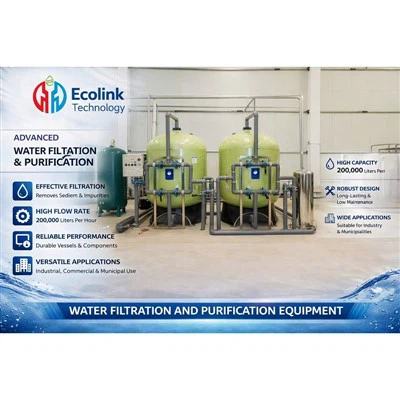
Here's how it works step by step. First, the raw water is pre - treated. This is a crucial step because it helps to remove large particles, sediment, and organic matter. If we don't pre - treat the water, these impurities can clog the RO membrane and reduce its efficiency. We usually use Industrial Water Filtration Equipment for this pre - treatment. It can include processes like sediment filtration, activated carbon filtration, and sometimes even ultrafiltration.
After pre - treatment, the water is pressurized and forced through the RO membrane. The pressure is typically much higher than the natural osmotic pressure, which is why it's called reverse osmosis. As the water passes through the membrane, the salt and other contaminants are left behind on one side of the membrane, and the purified water comes out on the other side.
The RO system can be adjusted to achieve different levels of desalination depending on the specific needs of the industrial process. For example, some industries may require water with very low salt content, while others can tolerate a slightly higher level.


Now, let's talk about distillation. Distillation is an older method of desalination, but it's still used in some industrial applications. The process involves heating the water until it turns into steam. When the water evaporates, the salt and other impurities are left behind. Then, the steam is cooled and condensed back into liquid water, which is now free of salt.
One of the advantages of distillation is that it can remove almost all types of contaminants, including some that RO might not be able to handle as effectively. However, it's also more energy - intensive compared to reverse osmosis. So, in many cases, RO is the preferred method, especially when energy efficiency is a major concern.
In our industrial water purifiers, we often combine different desalination methods to get the best results. For example, we might use RO as the primary desalination method and then follow it up with a distillation step for further purification if needed.
Another important aspect of the desalination process is the management of the brine or the concentrated salt solution that is left behind. This brine needs to be disposed of properly to avoid environmental issues. We have systems in place to handle the brine, and in some cases, we can even recover some of the valuable minerals from it.
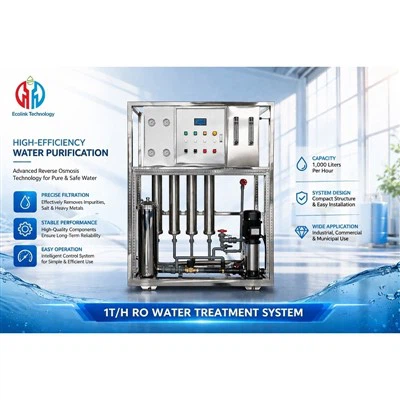
We also offer Industrial RO Water Treatment System and Industrial Ultrafiltration System as part of our product line. These systems can be customized to meet the specific requirements of different industries.
If you're in an industry that requires high - quality desalinated water, such as the pharmaceutical, food and beverage, or electronics industries, our industrial water purifiers can be a great solution. We have a team of experts who can help you choose the right system for your needs and provide you with support throughout the installation and operation process.
Whether you're looking to upgrade your existing water purification system or starting a new project, we're here to help. If you're interested in learning more about our products or have any questions about the desalination process, feel free to reach out to us. We'd love to have a chat with you and discuss how we can meet your industrial water purification needs.
References:
- "Water Treatment Handbook" by A. P. Sincero and G. A. Sincero
- "Desalination: Principles and Processes" by J. L. Delyannis and E. S. Delyannis