
As a supplier of Industrial Water Filtration Systems, I am often asked about how these systems effectively remove heavy metals from industrial water. Heavy metals such as lead, mercury, cadmium, and arsenic are common contaminants in industrial wastewater. Their presence not only poses a threat to the environment but also to human health. In this blog, I will delve into the various methods and technologies employed by industrial water filtration systems to remove heavy metals.
Physical Filtration
Physical filtration is the first line of defense in an industrial water filtration system. It involves the use of filters with different pore sizes to trap solid particles, including heavy metal - containing compounds. For example, sediment filters can remove larger particles such as sand, silt, and rust. These filters are typically made of materials like polypropylene or cellulose.
The process of physical filtration is relatively straightforward. Water is forced through the filter media, and particles larger than the pore size of the filter are retained. However, physical filtration alone is not sufficient to remove dissolved heavy metals. For that, we need to rely on other advanced techniques.
Chemical Precipitation
Chemical precipitation is a widely used method for removing heavy metals from industrial water. This process involves adding chemicals to the water to react with the heavy metal ions and form insoluble precipitates. The most commonly used chemicals for this purpose are hydroxides, sulfides, and carbonates.
For instance, when sodium hydroxide is added to water containing heavy metal ions, it reacts with the metal ions to form metal hydroxides. These metal hydroxides are insoluble and can be easily removed by sedimentation or filtration. The chemical reactions can be represented as follows:
[M^{n +}+nOH^-\rightarrow M(OH)_n\downarrow]
where (M^{n+}) represents the heavy metal ion and (M(OH)_n) is the metal hydroxide precipitate.
Chemical precipitation is effective in removing a wide range of heavy metals, including lead, copper, and zinc. However, it has some limitations. The process requires careful control of pH and chemical dosage to ensure maximum precipitation. Additionally, the disposal of the precipitated sludge can be a challenge.
Ion Exchange
Ion exchange is another important method for heavy metal removal. In an ion - exchange process, the heavy metal ions in the water are exchanged with other ions on an ion - exchange resin. The resin is a solid material with a high affinity for certain ions.
For example, a cation - exchange resin can be used to remove heavy metal cations such as (Pb^{2+}), (Cu^{2+}), and (Cd^{2+}). The resin contains functional groups that can attract and bind these metal ions. When the water passes through the resin bed, the heavy metal ions are exchanged with the ions on the resin.
The ion - exchange process is highly selective and can achieve high removal efficiencies. However, the resin needs to be regenerated periodically to restore its ion - exchange capacity. This is usually done by passing a concentrated solution of a regenerant, such as sodium chloride, through the resin bed.


Reverse Osmosis
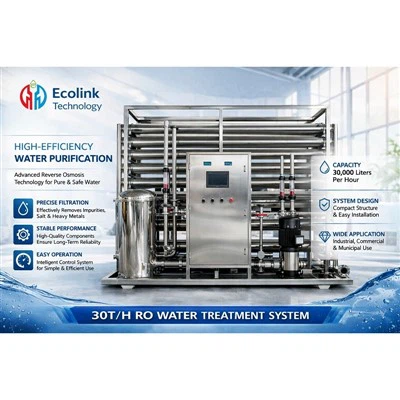
Reverse osmosis (RO) is a powerful technology for heavy metal removal in industrial water filtration systems. In a Industrial Reverse Osmosis System, water is forced through a semi - permeable membrane under pressure. The membrane allows water molecules to pass through while rejecting most dissolved solids, including heavy metals.
The semi - permeable membrane has very small pores that can block the passage of heavy metal ions. The rejection rate of heavy metals by RO membranes can be as high as 95% or more. RO systems are often used in combination with other filtration methods to achieve the highest level of water purification.
One of the advantages of RO is its ability to remove a wide range of contaminants, not just heavy metals. It can also remove salts, organic compounds, and microorganisms. However, RO systems require a significant amount of energy to operate, and the membranes need to be maintained and replaced periodically.
Adsorption
Adsorption is a process in which heavy metal ions are attracted to and held on the surface of an adsorbent material. Common adsorbents used in industrial water filtration include activated carbon, zeolites, and ion - exchange resins.
Activated carbon is a porous material with a large surface area. It can adsorb heavy metal ions through physical and chemical interactions. Zeolites are crystalline aluminosilicates that have a unique structure with pores and channels. They can selectively adsorb heavy metal ions based on their size and charge.
Adsorption is a simple and effective method for heavy metal removal. It can be used as a standalone process or in combination with other methods. However, the adsorbent needs to be regenerated or replaced when it becomes saturated with heavy metals.
The Role of Industrial Water Filtration Systems
An Industrial Water Filtration System typically combines multiple methods to achieve the best results in heavy metal removal. For example, a system may start with physical filtration to remove large particles, followed by chemical precipitation to remove dissolved heavy metals. Ion exchange or reverse osmosis can then be used to further purify the water and remove any remaining heavy metal ions.
These systems are designed to meet the specific needs of different industries. For example, the water treatment requirements of a mining operation may be different from those of a food processing plant. Our company offers a range of Industrial RO Water Treatment System that can be customized to suit the unique needs of each customer.
Conclusion
In conclusion, industrial water filtration systems play a crucial role in removing heavy metals from industrial wastewater. Through a combination of physical filtration, chemical precipitation, ion exchange, reverse osmosis, and adsorption, these systems can effectively reduce the concentration of heavy metals to acceptable levels.
If you are in need of an industrial water filtration system for heavy metal removal, we are here to help. Our team of experts can assess your specific requirements and recommend the most suitable system for your application. Contact us today to start a discussion about your water treatment needs and explore how our industrial water filtration systems can benefit your business.
References
- AWWA (American Water Works Association). Water Quality and Treatment: A Handbook of Community Water Supplies. McGraw - Hill, 2017.
- Crittenden, J. C., et al. Water Treatment: Principles and Design. John Wiley & Sons, 2012.
- Snoeyink, V. L., and Jenkins, D. Water Chemistry. John Wiley & Sons, 1980.