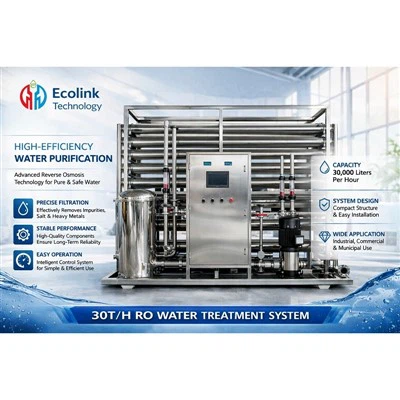

As a trusted supplier of Industrial Ultrafiltration System, I understand the critical role that membrane modules play in the overall performance and efficiency of an industrial ultrafiltration system. Selecting the right membrane module is not a one - size - fits - all decision; it requires careful consideration of various factors. In this blog, I will guide you through the key aspects to consider when choosing a membrane module for your industrial ultrafiltration system.
Understanding Industrial Ultrafiltration
Ultrafiltration is a pressure - driven membrane separation process that is widely used in industrial settings for the removal of suspended solids, colloids, bacteria, and large - molecular - weight organic compounds from water and other fluids. The membrane module is the heart of the ultrafiltration system, where the actual separation takes place. Industrial ultrafiltration has a vast range of applications, such as in the food and beverage industry for clarification, in the pharmaceutical industry for purifying drug solutions, and in the wastewater treatment industry for recycling and reusing water.
Key Factors in Membrane Module Selection
1. Pore Size
The pore size of the membrane is one of the most crucial factors. It determines the size of the particles and molecules that can be retained by the membrane. For example, if your industrial process requires the removal of bacteria and suspended solids, a membrane with a pore size in the range of 0.01 - 0.1 micrometers is typically suitable. For applications where you need to separate larger macromolecules, a larger pore size might be acceptable. However, if you aim to remove smaller viruses, you will need a membrane with a much smaller pore size.
2. Membrane Material
There is a wide variety of membrane materials available, each with its own advantages and disadvantages.
- Polysulfone (PS): It is a popular choice due to its high chemical resistance, good mechanical strength, and thermal stability. PS membranes are often used in applications where the feed solution contains a wide range of chemicals.
- Polyvinylidene Fluoride (PVDF): PVDF membranes are known for their excellent chemical and oxidative resistance. They are commonly used in harsh industrial environments, such as in the treatment of industrial wastewater with high levels of oxidizing agents.
- Cellulose Acetate (CA): CA membranes are relatively inexpensive and have good hydrophilicity, which means they have a high water flux. However, they are less resistant to chemical and biological degradation compared to PS and PVDF.
3. Module Configuration
The configuration of the membrane module also affects its performance.
- Hollow Fiber Modules: These modules consist of thousands of tiny hollow fibers bundled together. They have a large surface area per unit volume, which allows for high filtration rates. Hollow fiber modules are suitable for applications where a high flux is required, such as in large - scale industrial water purification. They are also relatively easy to clean and maintain.
- Spiral Wound Modules: Spiral wound modules are made by winding a flat sheet membrane around a central tube. They are compact and have a relatively high packing density. Spiral wound modules are often used in applications where space is limited, such as in mobile or compact industrial water treatment units.
- Plate and Frame Modules: Plate and frame modules are composed of a series of flat plates separated by gaskets. They offer easy access to the membrane for cleaning and replacement. Plate and frame modules are suitable for applications where the feed solution contains a high concentration of solids, as they can withstand higher fouling rates compared to other configurations.
4. Flux and Productivity
Flux is defined as the volume of permeate (the filtered fluid) that passes through the membrane per unit area and per unit time. It is an important parameter to consider when selecting a membrane module because it directly affects the productivity of the ultrafiltration system. A high - flux membrane module can achieve a higher filtration rate, which means less time and energy are required to treat a given volume of fluid. However, it's important to note that a very high flux may also lead to faster fouling of the membrane. Therefore, a balance needs to be struck between flux and fouling rate.
5. Chemical Compatibility
The membrane module must be chemically compatible with the feed solution. If the feed solution contains strong acids, bases, or other aggressive chemicals, the membrane material must be able to withstand these chemicals without significant degradation. For example, if your industrial process involves treating a solution with a high concentration of chlorine, you need to choose a membrane material that is resistant to chlorine, such as PVDF.
6. Cost - effectiveness
Cost is always a significant consideration in industrial processes. When selecting a membrane module, you need to consider not only the initial purchase cost but also the operating and maintenance costs over the lifetime of the module. A cheaper membrane module may have a lower initial cost but may require more frequent replacement or more intensive cleaning, which can increase the overall cost in the long run.
Case Studies
Let's look at a couple of real - world case studies to illustrate the importance of proper membrane module selection.
Case 1: Food and Beverage Industry
A juice production company was using an ultrafiltration system to clarify their freshly squeezed juices. Initially, they used a membrane module with a relatively large pore size and a cellulose acetate membrane. However, they found that the juice had a high level of turbidity after filtration, and the membrane fouled quickly. After consulting with our team, they switched to a polysulfone membrane module with a smaller pore size. This change significantly improved the clarity of the juice and reduced the frequency of membrane cleaning. As a result, the company was able to increase the productivity of their ultrafiltration system and improve the quality of their final product.
Case 2: Pharmaceutical Industry
A pharmaceutical company was using an ultrafiltration system to purify a drug solution. They were having issues with the removal of small impurities and the loss of some active ingredients. We recommended a hollow fiber membrane module made of PVDF with a very small pore size. This membrane was able to retain the impurities while allowing the active ingredients to pass through, resulting in a much purer drug solution. The company was satisfied with the improved product quality and the reduced waste generation.
How Our Company Can Help
As a leading supplier of Industrial Ultrafiltration System, we have a wide range of membrane modules to meet the diverse needs of different industrial applications. Our team of experts can help you analyze your specific requirements, such as the characteristics of the feed solution, the required filtration rate, and the budget constraints. We can provide you with detailed technical advice on choosing the most suitable membrane material, module configuration, and pore size.
In addition to membrane module selection, we also offer comprehensive after - sales services, including installation, commissioning, and maintenance of the ultrafiltration system. Our goal is to ensure that your industrial ultrafiltration system operates at its optimal performance, providing you with high - quality filtered water or other fluids.
If you are in the process of selecting a membrane module for your industrial ultrafiltration system, or if you have any questions about our products and services, we encourage you to contact us for a detailed consultation. Whether you need an Industrial Water Filtration System or an Industrial Water Purifier, we are here to assist you in making the right decision.


References
- Cheryan, M. (1998). Ultrafiltration and Microfiltration Handbook. Technomic Publishing.
- Mulder, M. (1996). Basic Principles of Membrane Technology. Kluwer Academic Publishers.
- Porter, M. C. (1990). Handbook of Industrial Membrane Technology. Noyes Publications.