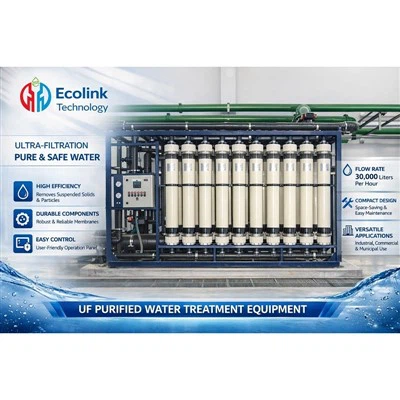

In the world of industrial water treatment, ultrafiltration systems play a crucial role. As an industrial ultrafiltration system supplier, I've seen firsthand how these systems can transform the way industries handle water. And at the heart of many of these systems is the pump. So, what exactly is the role of a pump in an industrial ultrafiltration system? Let's dive in.
1. Understanding Industrial Ultrafiltration Systems
Before we talk about the pump, it's important to have a basic understanding of industrial ultrafiltration systems. These systems are designed to remove suspended solids, bacteria, and other contaminants from water. They use a semi - permeable membrane with pores that are small enough to block these unwanted particles but large enough to allow water and some small molecules to pass through.
Industrial ultrafiltration systems are used in a wide range of industries, from food and beverage to pharmaceuticals and power generation. They help ensure that the water used in industrial processes is clean and free from harmful substances. If you're interested in learning more about these systems, you can check out our Industrial Water Filtration System.
2. The Basics of a Pump in an Ultrafiltration System
A pump in an industrial ultrafiltration system is like the heart of the operation. It's responsible for moving the water through the system at the right pressure and flow rate. Without a properly functioning pump, the ultrafiltration process wouldn't work effectively.
Pressure Generation
One of the main roles of the pump is to generate the pressure needed to force water through the ultrafiltration membrane. The membrane has tiny pores, and water needs to be pushed through these pores to separate the contaminants from the clean water. The pump creates the necessary pressure to overcome the resistance of the membrane and ensure a continuous flow of water.
For example, in a large - scale industrial ultrafiltration system, the pump might need to generate pressures of several bars to achieve the desired filtration rate. Different types of membranes have different pressure requirements, and the pump needs to be adjusted accordingly.
Flow Rate Control
The pump also controls the flow rate of water through the ultrafiltration system. The flow rate is important because it affects the efficiency of the filtration process. If the flow rate is too high, the water might not have enough time to pass through the membrane properly, and some contaminants could be carried through. On the other hand, if the flow rate is too low, the system might not be able to process enough water to meet the industrial demand.
As a supplier, we often work with our customers to determine the optimal flow rate for their specific ultrafiltration system. This involves considering factors such as the size of the system, the type of contaminants being removed, and the overall water demand of the industry.
3. Types of Pumps Used in Industrial Ultrafiltration Systems
There are several types of pumps that can be used in industrial ultrafiltration systems, and each has its own advantages and disadvantages.
Centrifugal Pumps
Centrifugal pumps are one of the most commonly used pumps in industrial ultrafiltration systems. They work by using a rotating impeller to create centrifugal force, which moves the water through the pump and into the ultrafiltration system. These pumps are relatively simple in design, easy to maintain, and can handle a wide range of flow rates and pressures.
However, centrifugal pumps might not be the best choice for systems that require very high pressures or for handling viscous fluids. In some cases, they might also experience cavitation, which can damage the pump and reduce its efficiency.
Positive Displacement Pumps
Positive displacement pumps are another option for industrial ultrafiltration systems. These pumps work by trapping a fixed amount of water and then forcing it through the system. They are capable of generating high pressures and are well - suited for handling viscous fluids.
Examples of positive displacement pumps include piston pumps and diaphragm pumps. Piston pumps use a piston to move the water, while diaphragm pumps use a flexible diaphragm. These pumps are more complex in design and require more maintenance compared to centrifugal pumps, but they can provide more precise control over the flow rate and pressure.
4. Importance of Pump Selection
Selecting the right pump for an industrial ultrafiltration system is crucial. A pump that is too small might not be able to generate enough pressure or flow rate, while a pump that is too large can be wasteful and expensive to operate.
When choosing a pump, we consider several factors. First, we look at the required pressure and flow rate of the ultrafiltration system. This is determined by the size of the system, the type of membrane being used, and the water quality requirements.
We also consider the type of fluid being pumped. If the water contains a lot of suspended solids or is viscous, a positive displacement pump might be a better choice. On the other hand, if the water is relatively clean and the system doesn't require extremely high pressures, a centrifugal pump could be sufficient.
Another important factor is the energy efficiency of the pump. In today's industrial environment, energy costs are a significant concern. We try to select pumps that are energy - efficient to help our customers reduce their operating costs.
5. Maintenance and Troubleshooting of Pumps in Ultrafiltration Systems
Proper maintenance of the pump is essential to ensure the long - term performance of the industrial ultrafiltration system. Regular maintenance includes checking the pump for leaks, monitoring the pressure and flow rate, and lubricating the moving parts.
If a pump starts to malfunction, it can have a significant impact on the ultrafiltration process. Common problems include reduced flow rate, increased pressure, and unusual noises. When these issues occur, we work with our customers to troubleshoot the problem.
Sometimes, the problem might be as simple as a clogged filter or a loose connection. In other cases, it could be a more serious issue with the pump itself, such as a worn - out impeller or a damaged diaphragm. Our team of experts is trained to diagnose and fix these problems quickly to minimize downtime for our customers.
6. The Role of Pumps in Related Industrial Water Treatment Systems
Pumps also play important roles in other related industrial water treatment systems. For example, in an Industrial RO Water Treatment System, a pump is needed to generate the high pressure required to force water through the reverse osmosis membrane.
In an Industrial Water Purifier, the pump helps move the water through the purification process, whether it's through filtration, disinfection, or other treatment methods.
7. Contact Us for Your Industrial Ultrafiltration Needs
If you're in the market for an industrial ultrafiltration system or need help with pump selection, maintenance, or troubleshooting, we're here to assist you. Our team of experts has years of experience in the industrial water treatment industry and can provide you with the best solutions for your specific needs.
Don't hesitate to reach out to us for a consultation. We'll work closely with you to understand your requirements and recommend the most suitable industrial ultrafiltration system and pump for your operation.


References
- Cheryan, M. (1998). Ultrafiltration Handbook. Technomic Publishing.
- Crittenden, J. C., Trussell, R. R., Hand, D. W., Howe, K. J., & Tchobanoglous, G. (2012). Water Treatment: Principles and Design. John Wiley & Sons.