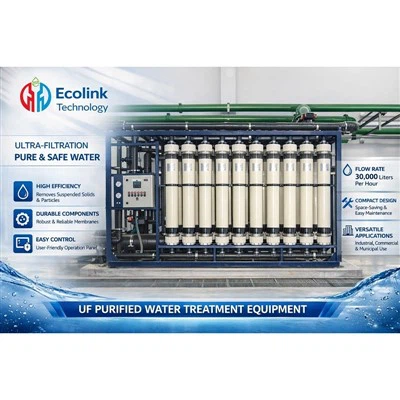

Water purification is a crucial process that ensures the supply of clean and safe water for various applications. There are two main types of water purifiers: industrial water purifiers and domestic water purifiers. As a supplier of Industrial Water Purifier, I have a deep understanding of the differences between these two types of water purifiers. In this blog, I will compare industrial water purifiers with domestic water purifiers in terms of capacity, technology, cost, and maintenance.
Capacity
One of the most significant differences between industrial and domestic water purifiers is their capacity. Domestic water purifiers are designed to meet the daily water needs of a household, typically ranging from a few liters to a few hundred liters per day. These purifiers are usually installed under the sink or on the countertop and are suitable for small - scale water purification.


On the other hand, industrial water purifiers are built to handle large volumes of water. Industries such as manufacturing, power generation, and food processing require a continuous supply of large amounts of purified water. Industrial water purifiers can process thousands to millions of liters of water per day. For example, a large - scale chemical manufacturing plant may need an industrial water purifier with a capacity of several million liters per day to ensure the quality of its products and the smooth operation of its production processes.
Technology
The technologies used in industrial and domestic water purifiers also vary significantly. Domestic water purifiers often use relatively simple purification technologies such as activated carbon filtration, reverse osmosis (RO), and ultraviolet (UV) disinfection. Activated carbon filters can remove chlorine, sediment, and some organic compounds from the water. RO systems are effective in removing dissolved salts, heavy metals, and other contaminants by forcing water through a semi - permeable membrane. UV disinfection is used to kill bacteria and viruses in the water.
Industrial water purifiers, however, employ more advanced and complex technologies. Industrial Ultrafiltration System is a common technology in industrial water purification. Ultrafiltration can remove particles, colloids, bacteria, and some viruses from the water by using a membrane with a pore size of typically 0.01 - 0.1 micrometers. Another important technology is the Industrial Reverse Osmosis System, which is similar to the domestic RO system but is designed for high - volume and high - pressure operation. Industrial RO systems can achieve a high level of water purification, removing up to 99% of dissolved salts and other contaminants.
In addition, industrial water purifiers may also use ion exchange, electro - deionization (EDI), and distillation technologies. Ion exchange is used to remove specific ions from the water, such as calcium and magnesium ions to soften the water. EDI is a continuous process that combines ion exchange and electrodialysis to produce high - purity water. Distillation involves boiling the water and condensing the steam to remove all impurities.
Cost
The cost of industrial and domestic water purifiers is another aspect where they differ. Domestic water purifiers are generally more affordable. The price of a basic domestic water purifier can range from a few tens of dollars to a few hundred dollars. These purifiers are designed for the average consumer and are relatively easy to install and operate.
Industrial water purifiers, on the other hand, are much more expensive. The cost of an industrial water purifier can range from tens of thousands to millions of dollars, depending on its capacity, technology, and complexity. In addition to the initial purchase cost, industrial water purifiers also incur significant operating costs, including energy consumption, maintenance, and replacement of filter elements. However, for industries, the investment in an industrial water purifier is often justified by the need to ensure product quality, comply with environmental regulations, and maintain the efficiency of production processes.
Maintenance
Maintenance requirements for industrial and domestic water purifiers also vary. Domestic water purifiers are relatively easy to maintain. Most domestic water purifiers only require periodic replacement of filter cartridges, which can usually be done by the user. The frequency of filter replacement depends on the quality of the source water and the usage of the purifier.
Industrial water purifiers, however, require more comprehensive and professional maintenance. These purifiers have complex components and systems that need to be regularly inspected, cleaned, and repaired. Industrial water purifiers often have multiple stages of filtration and purification, and each stage may require specific maintenance procedures. For example, the membranes in an industrial RO system need to be cleaned and replaced periodically to maintain their performance. In addition, industrial water purifiers may also require the use of specialized chemicals for cleaning and disinfection. Professional technicians are usually needed to perform the maintenance of industrial water purifiers.
Applications
Domestic water purifiers are mainly used for providing clean drinking water for households. They can improve the taste, odor, and quality of tap water, removing contaminants such as chlorine, lead, and bacteria. Some domestic water purifiers can also be used for other purposes, such as filtering water for cooking and making coffee.
Industrial water purifiers have a wide range of applications in various industries. In the food and beverage industry, industrial water purifiers are used to ensure the quality and safety of products. For example, purified water is used in the production of soft drinks, beer, and dairy products. In the pharmaceutical industry, high - purity water is required for the production of drugs and medical devices. Industrial water purifiers are also used in the power generation industry to prevent scaling and corrosion in boilers and cooling systems.
Conclusion
In conclusion, industrial water purifiers and domestic water purifiers have significant differences in terms of capacity, technology, cost, maintenance, and applications. Domestic water purifiers are suitable for small - scale water purification in households, offering an affordable and easy - to - maintain solution for clean drinking water. Industrial water purifiers, on the other hand, are designed for large - scale water purification in industries, with higher capacity, more advanced technologies, and more complex maintenance requirements.
If you are an industry in need of a reliable and efficient water purification solution, our Industrial Water Purifier can meet your specific needs. We offer a wide range of industrial water purification products, including Industrial Ultrafiltration System and Industrial Reverse Osmosis System. Our experienced team can provide you with professional advice and support to help you select the most suitable water purification system for your business. Please feel free to contact us to discuss your water purification requirements and start a procurement negotiation.
References
- AWWA (American Water Works Association). Water Quality and Treatment: A Handbook of Community Water Supplies.
- Crittenden, J. C., et al. Water Treatment: Principles and Design.
- Metcalf & Eddy. Wastewater Engineering: Treatment and Reuse.