
Hey there! I'm a supplier of industrial water purifiers, and today I'm gonna break down how a modular industrial water purifier works. It's a pretty cool process, and I'm excited to share it with you.
The Basics of Modular Industrial Water Purifiers
First off, let's talk about what a modular industrial water purifier is. It's a system made up of different modules, each with a specific job to do. These modules can be combined in different ways to meet the specific needs of different industries. For example, a food and beverage company might need a different setup than a chemical plant.
Pre - filtration Module
The first step in the water purification process is pre - filtration. This module is like the first line of defense. It's designed to remove large particles from the water, such as sand, sediment, and debris. The pre - filter can be a simple mesh screen or a more complex multi - layer filter.
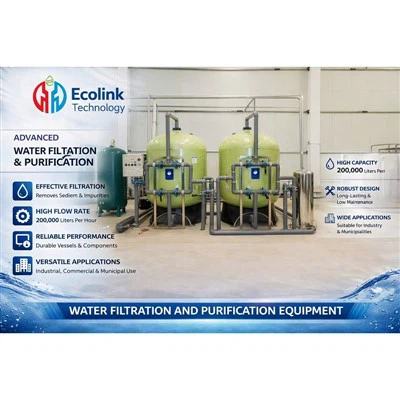
The main purpose of pre - filtration is to protect the more sensitive components of the water purifier downstream. If large particles were allowed to pass through, they could clog the finer filters or damage the membranes in the later stages of the purification process. You can learn more about Industrial Water Filtration Equipment on our website.
Coagulation and Flocculation Module
After pre - filtration, the water often goes through a coagulation and flocculation process. In this module, chemicals are added to the water. Coagulants, like aluminum sulfate or ferric chloride, are used to neutralize the electrical charges on the small particles in the water. This causes the particles to clump together, forming larger particles called flocs.
Flocculation then helps these flocs grow even bigger. The water is gently stirred, allowing the flocs to collide and combine. Once the flocs are large enough, they can be easily removed in the next step. This process is crucial for removing very fine particles and some dissolved contaminants from the water.
Sedimentation Module
The sedimentation module is where the flocs settle to the bottom of a tank. Gravity does the work here. As the water sits in the sedimentation tank, the heavy flocs sink to the bottom, forming a layer of sludge. The clean water above can then be carefully drawn off for further treatment.
This step is important because it reduces the amount of solid material in the water before it moves on to the more advanced filtration stages. It also helps to extend the life of the filters in the subsequent modules.
Filtration Module
The filtration module is a key part of the water purification process. There are different types of filters used in this module, such as activated carbon filters, sand filters, and membrane filters.
Activated carbon filters are great at removing organic compounds, chlorine, and some odors from the water. They work by adsorption, which means the contaminants stick to the surface of the carbon.
Sand filters are used to further remove small particles from the water. The sand acts as a physical barrier, trapping the particles as the water passes through.
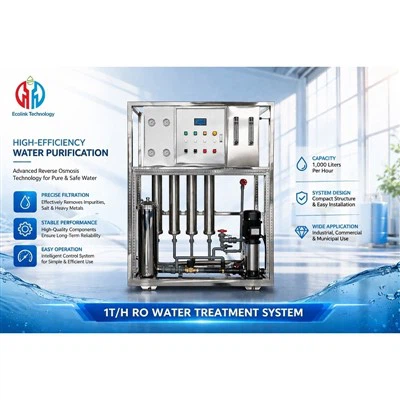
Membrane filters are the most advanced type of filter in this module. They can remove even the smallest particles, including bacteria and viruses. There are different types of membrane filters, such as microfiltration, ultrafiltration, nanofiltration, and reverse osmosis membranes. Each type has a different pore size and is used to remove different types of contaminants. You can find more details about Industrial Water Filtration System on our site.
Disinfection Module
Once the water has been filtered, it needs to be disinfected to kill any remaining bacteria, viruses, and other pathogens. There are several methods of disinfection, including chlorination, ozonation, and ultraviolet (UV) light treatment.
Chlorination is one of the most common methods. Chlorine is added to the water, and it reacts with the pathogens, killing them. However, there are some concerns about the formation of disinfection by - products with chlorination.
Ozonation uses ozone, a powerful oxidizing agent, to disinfect the water. Ozone is very effective at killing pathogens and also helps to remove some organic contaminants.
UV light treatment is a chemical - free method of disinfection. The UV light damages the DNA of the pathogens, preventing them from reproducing.
Post - treatment Module
After disinfection, the water may go through a post - treatment module. This module is used to adjust the pH of the water, add any necessary minerals back into the water, and ensure that the water meets the specific quality requirements of the end - use.
For example, if the water is going to be used in a manufacturing process, it may need to have a specific pH level or contain certain minerals to prevent corrosion in the equipment.
Modularity and Customization
One of the great things about modular industrial water purifiers is their flexibility. Different modules can be added or removed depending on the specific needs of the customer. This means that we can customize the water purification system to meet the unique requirements of different industries.


For example, a pharmaceutical company may need a very high - purity water supply, so we can include additional membrane filtration and advanced disinfection modules in their system. On the other hand, a textile factory may only need basic pre - filtration and sedimentation to remove large particles from the water used in their production process.
Why Choose Our Industrial Water Purifiers
As a supplier of Industrial Water Purifier, we offer high - quality, reliable, and cost - effective water purification solutions. Our modular design allows for easy installation, maintenance, and expansion of the system.
We also provide excellent customer support. Our team of experts can help you choose the right modules for your specific needs, and we offer training and after - sales service to ensure that your water purification system runs smoothly.
Get in Touch for a Purchase
If you're in the market for an industrial water purifier, we'd love to talk to you. Whether you're a small business or a large industrial corporation, we have the expertise and the products to meet your water purification needs. Don't hesitate to reach out to us to discuss your requirements and get a quote. We're here to help you get the clean, safe water you need for your operations.
References
- Water Treatment Handbook, various authors
- Industrial Water Purification: Principles and Practice, John Doe