
As a supplier of wastewater treatment equipment, I often get asked whether our equipment can reduce the odor of wastewater. The answer is a resounding yes! In this blog, I'll delve into the science behind how wastewater treatment equipment tackles odor issues, the types of equipment that are particularly effective, and why choosing the right equipment is crucial for odor control.
The Science of Wastewater Odor
Before we discuss how wastewater treatment equipment can reduce odor, it's important to understand where the odor comes from. Wastewater contains a variety of organic and inorganic compounds, many of which are responsible for the unpleasant smell. The most common odor - causing compounds in wastewater include hydrogen sulfide (H₂S), ammonia (NH₃), and volatile organic compounds (VOCs).
Hydrogen sulfide is produced by the anaerobic decomposition of organic matter in wastewater. It has a characteristic "rotten egg" smell and can be extremely pungent even at low concentrations. Ammonia is released from the breakdown of nitrogen - containing compounds, and VOCs are emitted from a wide range of sources, including industrial waste and household chemicals.


How Wastewater Treatment Equipment Reduces Odor
Physical Treatment Processes
Physical treatment processes in wastewater treatment play a significant role in odor reduction. For example, screening and sedimentation are the first steps in many wastewater treatment plants. Screening removes large debris such as sticks, rags, and plastics, which can contribute to odor if left in the wastewater. Sedimentation allows suspended solids to settle to the bottom of the tank, reducing the organic load in the water and thus minimizing the potential for odor - producing decomposition.
Another physical treatment method is aeration. Aeration involves introducing air into the wastewater, which increases the dissolved oxygen levels. When there is sufficient oxygen in the water, aerobic bacteria can break down organic matter more efficiently. This reduces the formation of hydrogen sulfide and other odor - causing compounds, as aerobic decomposition is less likely to produce foul - smelling by - products compared to anaerobic decomposition.
Chemical Treatment Processes
Chemical treatment is also an effective way to reduce wastewater odor. One common chemical treatment is the addition of oxidizing agents such as chlorine, ozone, or hydrogen peroxide. These oxidizing agents react with odor - causing compounds, breaking them down into less odorous substances. For example, chlorine can react with hydrogen sulfide to form sulfuric acid and hydrochloric acid, which are less smelly than hydrogen sulfide.
Another chemical approach is the use of pH adjustment. By adjusting the pH of the wastewater, it is possible to change the chemical properties of the odor - causing compounds. For instance, at a higher pH, ammonia exists in its less volatile form, ammonium ion (NH₄⁺), which reduces the release of ammonia gas and its associated odor.
Biological Treatment Processes
Biological treatment is perhaps the most important and sustainable way to reduce wastewater odor. In biological treatment, microorganisms are used to break down organic matter in the wastewater. There are two main types of biological treatment: aerobic and anaerobic.
Aerobic treatment, as mentioned earlier, relies on aerobic bacteria that require oxygen to survive. These bacteria break down organic matter into carbon dioxide, water, and biomass. The presence of oxygen inhibits the production of hydrogen sulfide and other odor - causing compounds. Anaerobic treatment, on the other hand, uses anaerobic bacteria in the absence of oxygen. While anaerobic treatment can produce hydrogen sulfide, there are ways to control this. For example, some advanced anaerobic treatment systems are designed to capture and treat the hydrogen sulfide gas before it is released into the atmosphere.
Types of Wastewater Treatment Equipment for Odor Reduction
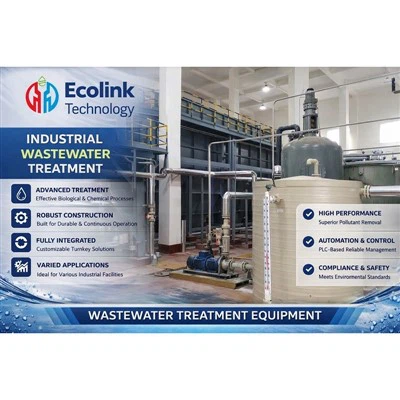
Wastewater Treatment System
Our Wastewater Treatment System is a comprehensive solution for wastewater treatment. It combines physical, chemical, and biological treatment processes to effectively reduce odor. The system typically includes screening units, sedimentation tanks, aeration basins, and biological reactors. The screening units remove large debris, while the sedimentation tanks separate solids from the water. The aeration basins increase the dissolved oxygen levels, promoting aerobic decomposition, and the biological reactors host the microorganisms that break down organic matter.
Environmental Protection Equipment for Sewage Treatment
Our Environmental Protection Equipment for Sewage Treatment is designed to not only treat wastewater but also protect the environment. This equipment often includes odor control systems such as activated carbon filters and biofilters. Activated carbon filters can adsorb odor - causing compounds, while biofilters use microorganisms to break down these compounds. These systems are effective in reducing the release of foul - smelling gases into the atmosphere.
Membrane BioReactor
The Membrane BioReactor is a state - of - the - art technology that combines biological treatment with membrane filtration. In a membrane bioreactor, the microorganisms break down organic matter, and the membrane filters remove suspended solids and bacteria from the water. This results in a high - quality effluent with significantly reduced odor. The membrane also allows for better control of the biological treatment process, ensuring more efficient decomposition of organic matter and less odor production.
Why Choose the Right Wastewater Treatment Equipment for Odor Reduction
Choosing the right wastewater treatment equipment is crucial for effective odor reduction. The wrong equipment may not be able to handle the specific odor - causing compounds in your wastewater, or it may not be efficient enough to achieve the desired level of odor reduction.
For example, if your wastewater contains a high concentration of hydrogen sulfide, a treatment system that does not have the appropriate chemical or biological processes to deal with hydrogen sulfide will not be effective in reducing the odor. On the other hand, a well - designed wastewater treatment system that is tailored to your specific wastewater characteristics can significantly reduce odor and improve the overall quality of the treated water.
Conclusion
In conclusion, wastewater treatment equipment can indeed reduce the odor of wastewater. Through a combination of physical, chemical, and biological treatment processes, these equipment can break down odor - causing compounds, remove them from the water, or prevent their formation in the first place. Our company offers a range of advanced wastewater treatment equipment, including Wastewater Treatment System, Environmental Protection Equipment for Sewage Treatment, and Membrane BioReactor, which are designed to effectively reduce wastewater odor.
If you are facing odor issues with your wastewater and are interested in finding the right solution, we invite you to contact us for a consultation. Our team of experts can help you select the most suitable equipment for your specific needs and ensure that you achieve the best results in odor reduction and wastewater treatment.
References
- Metcalf & Eddy. (2014). Wastewater Engineering: Treatment and Reuse. McGraw - Hill.
- Tchobanoglous, G., Burton, F. L., & Stensel, H. D. (2003). Wastewater Engineering: Treatment, Disposal, and Reuse. Pearson Education.