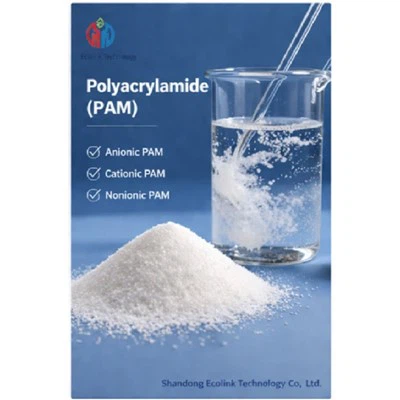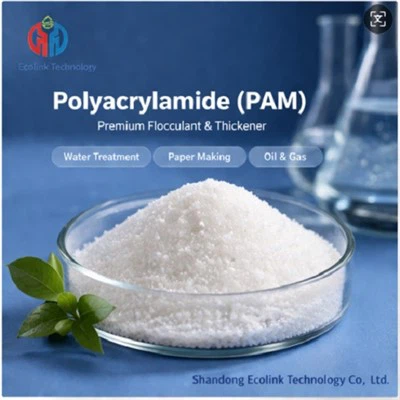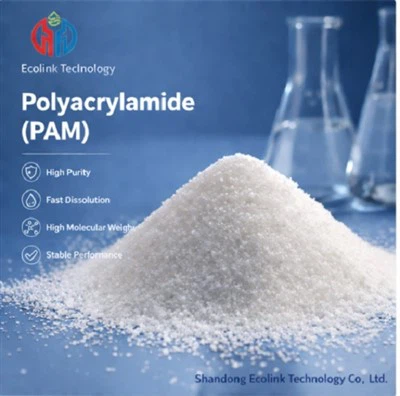
Polyacrylamide (abbreviated as PAM) is a linear, water-soluble polymeric compound and stands as one of the most widely utilized varieties among water-soluble polymers. Polyacrylamide and its derivatives are collectively referred to as polyacrylamide; the molecular formula for pure polyacrylamide is (CH2CHCONH2)n. Polyacrylamide presents as a white, non-toxic powder; it exhibits good thermal stability at 100°C, though it will decompose to release nitrogen gas if heated to excessive temperatures (above 150°C). It is readily soluble in water, hygroscopic, and insoluble in common organic solvents (such as benzene, esters, and acetone). Polyacrylamide possesses excellent biocompatibility and high viscosity, and it is highly miscible with most common surfactants. Its degree of polymerization can range from 10,000 to 90,000, corresponding to a molecular weight of 1.5 million to 6 million. Its flocculating efficacy stems from its strong adsorption capacity on colloidal surfaces, which facilitates the formation of bridges between colloidal particles.
Polyacrylamide is synthesized through the direct polymerization of acrylamide monomers. Since both acrylamide and its polymers are water-soluble, solution polymerization is the most convenient synthesis method; potassium persulfate or ammonium persulfate typically serve as initiators, although redox-type initiators may also be employed. Upon completion of the polymerization reaction, sodium nitrite or urea should be added to function as molecular weight regulators and stabilizers. Polyacrylamide products are primarily available in three forms: aqueous solutions, solid powders, and latex emulsions; furthermore, they can be classified into non-ionic, anionic, or cationic types. Polyacrylamide is primarily utilized for the flocculation and sedimentation of suspensions rich in inorganic matter, or for treating high-turbidity water (containing sand concentrations ranging from 10 to 100 kg/m³). It may be used independently or in conjunction with coagulants; when used in combination, the polyacrylamide should be added first, followed by thorough mixing before the coagulant is introduced. Polyacrylamide and its derivatives have extensive applications, serving effectively as flocculants, thickeners, reinforcing agents, and surfactants across various sectors, including water treatment, papermaking, petroleum, mining and metallurgy, geology, textiles, and light industry.