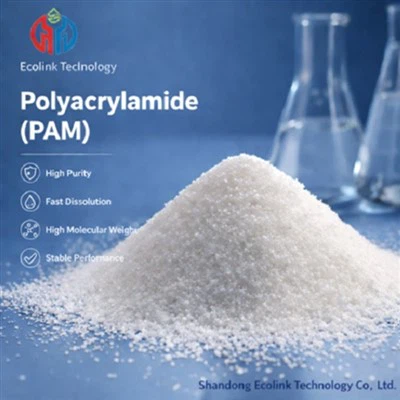

Landfill leachate is a complex and highly polluted wastewater generated from landfills. It contains a variety of contaminants such as heavy metals, organic compounds, and suspended solids. The treatment of landfill leachate is a challenging task, and anionic polyacrylamide (APAM) has emerged as a valuable tool in this process. As a supplier of anionic polyacrylamide, I will delve into how APAM works in landfill leachate treatment.
1. Characteristics of Landfill Leachate
Landfill leachate is characterized by its high chemical oxygen demand (COD), biochemical oxygen demand (BOD), ammonia nitrogen, and suspended solids. The composition of leachate can vary depending on factors such as the age of the landfill, waste composition, and local climate. These contaminants pose significant environmental risks if not properly treated. For example, high levels of heavy metals can contaminate groundwater, and organic compounds can cause eutrophication in water bodies.
2. How Anionic Polyacrylamide Works in Landfill Leachate Treatment
2.1 Flocculation and Sedimentation
One of the primary functions of anionic polyacrylamide in landfill leachate treatment is flocculation. APAM is a high - molecular - weight polymer with negatively charged functional groups. In landfill leachate, many suspended particles carry positive charges. When APAM is added to the leachate, the negatively charged APAM molecules interact with the positively charged particles through electrostatic attraction.
This interaction causes the small suspended particles to aggregate into larger flocs. These flocs are heavier and settle more quickly under the influence of gravity. As a result, the sedimentation process is accelerated, and the removal of suspended solids from the leachate is enhanced. For instance, in a landfill leachate treatment plant, the addition of an appropriate amount of APAM can significantly reduce the turbidity of the leachate, making it easier to separate the solid and liquid phases.
2.2 Removal of Organic Matter
Anionic polyacrylamide can also play a role in the removal of organic matter from landfill leachate. Some organic substances in the leachate can adsorb onto the surface of the APAM flocs. As the flocs settle, the adsorbed organic matter is removed from the leachate. Additionally, APAM can enhance the performance of other treatment processes such as coagulation. By promoting the formation of larger flocs, it helps in the entrapment of organic particles, which can then be removed more effectively.
2.3 Reduction of Heavy Metals
Heavy metals in landfill leachate can be a major concern. Anionic polyacrylamide can assist in the removal of heavy metals through a process called chelation. The negatively charged functional groups of APAM can bind to positively charged heavy metal ions, forming complexes. These complexes can then be removed along with the flocs during sedimentation. For example, metals like lead, cadmium, and copper can be effectively removed from the leachate with the help of APAM.
3. Factors Affecting the Performance of Anionic Polyacrylamide in Landfill Leachate Treatment
3.1 Dosage
The dosage of anionic polyacrylamide is a critical factor. If the dosage is too low, the flocculation effect will be insufficient, and the removal of contaminants will be poor. On the other hand, if the dosage is too high, it can lead to over - flocculation, which may cause the flocs to break up and reduce the treatment efficiency. The optimal dosage needs to be determined through laboratory tests and on - site trials, taking into account the characteristics of the landfill leachate.
3.2 Molecular Weight
The molecular weight of APAM also affects its performance. Higher molecular weight APAM generally has better flocculation ability because it can form larger and stronger flocs. However, it may also have higher viscosity, which can cause problems in the mixing process. Therefore, a balance needs to be struck between the molecular weight and the specific requirements of the landfill leachate treatment.
3.3 pH Value
The pH value of the landfill leachate can influence the performance of APAM. Different types of APAM have different optimal pH ranges for flocculation. For most anionic polyacrylamides, the optimal pH range is around 6 - 9. If the pH of the leachate is outside this range, the flocculation efficiency may be reduced. Adjusting the pH of the leachate to the optimal range can improve the performance of APAM.
4. Applications of Anionic Polyacrylamide in Different Landfill Leachate Treatment Processes
4.1 Pre - treatment
In the pre - treatment stage of landfill leachate, APAM can be used to remove large suspended solids and some organic matter. By adding APAM to the leachate, the sedimentation process is accelerated, which reduces the load on subsequent treatment processes. This can improve the overall efficiency of the treatment system.
4.2 Coagulation - Flocculation
Anionic polyacrylamide is often used in combination with coagulants in the coagulation - flocculation process. Coagulants such as aluminum sulfate or ferric chloride are first added to neutralize the charges of the suspended particles. Then, APAM is added to form larger flocs, which can be easily removed by sedimentation or filtration. This combined process can effectively remove a wide range of contaminants from the landfill leachate.
4.3 Membrane Filtration
In membrane filtration processes, APAM can be used to pre - treat the landfill leachate. By removing the suspended solids and some organic matter, it can reduce the fouling of the membranes. This helps to extend the service life of the membranes and improve the filtration efficiency.
5. Other Applications of Anionic Polyacrylamide
Apart from landfill leachate treatment, anionic polyacrylamide has a wide range of other applications. For example, it is used in mining operations. You can learn more about Polyacrylamide for Mining. In mining, APAM helps in the separation of solids from liquids, improving the efficiency of the mining process.
It is also used in hydraulic fracturing. Polyacrylamide for Hydraulic Fracturing is an important application where APAM is used to increase the viscosity of the fracturing fluid, which helps in the transportation of proppants and the creation of fractures in the rock.
In drilling operations, Anionic Polyacrylamide for Drilling is used to control the rheological properties of the drilling fluid, prevent wellbore instability, and improve the drilling efficiency.
6. Conclusion and Call to Action
Anionic polyacrylamide is a versatile and effective chemical in landfill leachate treatment. It can significantly improve the removal of suspended solids, organic matter, and heavy metals through flocculation, sedimentation, and chelation processes. By carefully considering factors such as dosage, molecular weight, and pH value, the performance of APAM in landfill leachate treatment can be optimized.


If you are involved in landfill leachate treatment or any of the other applications mentioned above and are looking for high - quality anionic polyacrylamide, we are here to help. Our anionic polyacrylamide products are of the highest quality and are tailored to meet the specific needs of different applications. Contact us to discuss your requirements and explore how our products can benefit your operations.
References
- Environmental Protection Agency. (2019). Landfill Leachate Treatment Technologies.
- Water Research Foundation. (2020). Advances in Landfill Leachate Treatment.
- Journal of Environmental Science and Technology. (2021). The Role of Anionic Polyacrylamide in Wastewater Treatment.