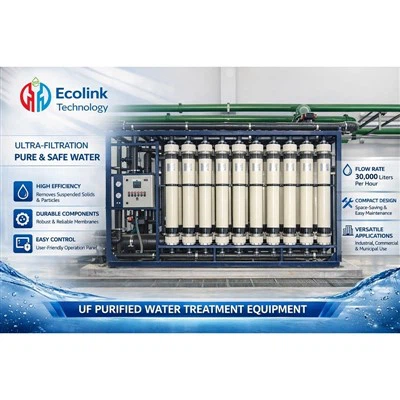

Hey there! As a supplier of Industrial Ultrafiltration Systems, I often get asked a super important question: "Can an Industrial Ultrafiltration System remove bacteria?" Well, let's dive right into it and find out.
First off, let's understand what an Industrial Ultrafiltration System is. An Industrial Ultrafiltration System is a powerful piece of equipment designed to filter out various contaminants from water in an industrial setting. It uses a semi - permeable membrane with tiny pores. These pores are so small that they can trap particles based on their size.
Bacteria are living microorganisms that can cause all sorts of problems in industrial processes and in the water we use. They can lead to corrosion, fouling of equipment, and even pose health risks if the water is used for certain applications. So, the ability to remove bacteria is crucial.
Now, the good news is that an Industrial Ultrafiltration System is pretty effective at removing bacteria. The size of most bacteria ranges from about 0.2 to 5 micrometers. And the pore size of ultrafiltration membranes typically ranges from 0.01 to 0.1 micrometers. This means that the membrane acts like a physical barrier, blocking the bacteria from passing through while allowing water and smaller molecules to flow.
Let's take a look at how it actually works. When water containing bacteria enters the ultrafiltration system, it is forced through the membrane under pressure. The bacteria, being larger than the pores of the membrane, get stuck on the surface of the membrane. The clean water then passes through the membrane and is collected on the other side.


However, it's not a 100% fool - proof process. There are a few factors that can affect the bacteria - removal efficiency of an Industrial Ultrafiltration System.
One factor is the condition of the membrane. Over time, the membrane can get fouled. Fouling occurs when particles, including bacteria, accumulate on the surface of the membrane, reducing its effectiveness. Regular maintenance and cleaning of the membrane are essential to keep it in good working condition. If the membrane is not properly maintained, bacteria might find their way through small holes or gaps that form due to fouling.
Another factor is the type of bacteria. Some bacteria are smaller or more flexible than others. In rare cases, very small or flexible bacteria might be able to squeeze through the pores of the membrane, especially if the membrane has been damaged or if the pressure is too high.
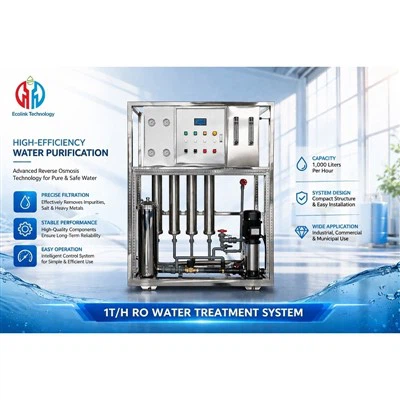
But don't worry, there are ways to enhance the bacteria - removal capabilities of an Industrial Ultrafiltration System. One common approach is to combine it with other water - treatment technologies. For example, an Industrial Reverse Osmosis System can be used in tandem with an ultrafiltration system. Reverse osmosis has even smaller pores than ultrafiltration and can remove a wider range of contaminants, including some bacteria that might have passed through the ultrafiltration membrane.
An Industrial Water Purifier can also be used to further purify the water after ultrafiltration. These purifiers can use additional methods like activated carbon filtration or UV disinfection to kill any remaining bacteria.
In many industrial applications, such as food and beverage production, pharmaceutical manufacturing, and power generation, the removal of bacteria is of utmost importance. An Industrial Ultrafiltration System can play a key role in ensuring that the water used in these processes is free from harmful bacteria.
For instance, in the food and beverage industry, bacteria can spoil products and cause foodborne illnesses. By using an ultrafiltration system, companies can ensure that the water used in their production processes is clean and safe. In the pharmaceutical industry, the presence of bacteria in water can contaminate drugs, which is a huge no - no. Ultrafiltration helps in maintaining the high - quality standards required for pharmaceutical manufacturing.
In power generation, bacteria can cause corrosion in pipes and equipment, leading to costly repairs and downtime. An ultrafiltration system can prevent this by removing bacteria from the water used in cooling systems and boilers.
So, to sum it up, an Industrial Ultrafiltration System can indeed remove bacteria, but its effectiveness depends on various factors. With proper maintenance and in combination with other water - treatment technologies, it can be a reliable solution for keeping your industrial water free from bacteria.
If you're in the market for an Industrial Ultrafiltration System or have any questions about how it can help with bacteria removal in your industrial process, don't hesitate to reach out. We're here to provide you with the best solutions and support to meet your water - treatment needs.
References:
- Water Treatment Handbook, various authors
- Industrial Filtration Technology Journals