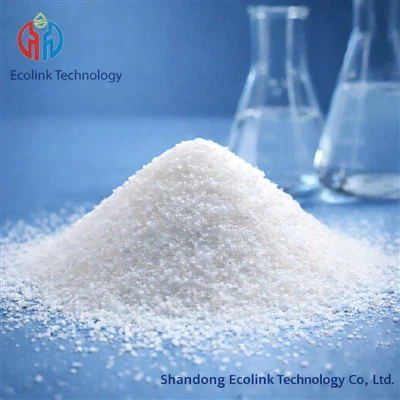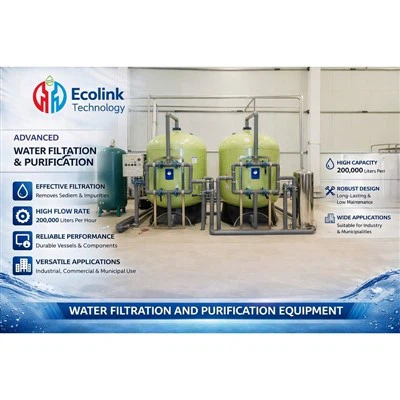
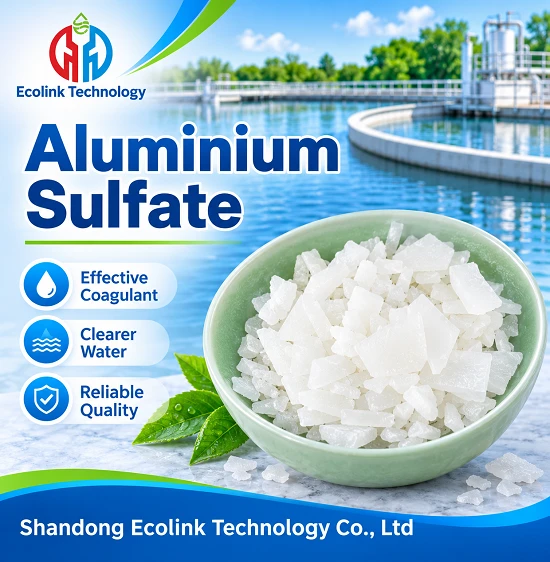
Shandong Ecolink Technology Co., Ltd. is one of the most reliable manufacturers and suppliers of iron-free aluminium sulfate in China, featured by quality products and good service. If you're going to wholesale high quality iron-free aluminium sulfate, welcome to get more information from our factory.
Product Overview
In drinking water treatment, industrial wastewater treatment, and paper manufacturing processes, the iron content, alumina content, water-insoluble matter, and product batch stability of aluminium sulfate all affect actual production performance. When using ordinary aluminium sulfate, purchasers may encounter issues such as excessively high iron impurities, turbid product solutions, incomplete dissolution, difficult-to-control dosage, unstable flocculation effects, and product caking due to moisture absorption. For production processes with high requirements for whiteness and product purity, these problems may also increase downstream processing costs and affect final product quality.
ECOLINK TECHNOLOGY provides Iron-Free Aluminium Sulfate, which can be supplied in powder, lump, and flake forms according to customer process requirements, along with two alumina content specifications of 16.5% and 17%.
To address the problems encountered by customers in procurement, preparation, dosing, and storage, we focus on the following aspects:
Iron Content Control: Provide low-iron specification options to help customers meet production demands that require specific whiteness and iron impurity content.
Product Specification Matching: Provide two Al₂O₃ content specifications of 16.5% and 17% for customer selection based on process requirements.
Product Form Selection: Provide powder, lump, and flake products to match different feeding equipment, dissolution methods, and production operation habits.
Water-Insoluble Matter Control: Help customers monitor insoluble impurities in the solution by defining product indicators, reducing their potential impact on subsequent processes.
Coagulation Effect Optimization: Assist customers in analyzing chemical selection and dosing schemes based on conditions such as raw water quality, pH, alkalinity, and turbidity.
Storage and Transportation Recommendations: Provide recommendations regarding packaging, moisture-proof measures, and storage tailored to the product's characteristic of easily absorbing moisture and caking.
ECOLINK TECHNOLOGY focuses not only on the product itself, but also on the matching between the product and the customer's actual application process. We specialize in water treatment chemicals and equipment, providing global customers with more suitable product choices through product matching, technical support, and one-stop supply services.
Product Introduction
What is Iron-Free Aluminium Sulfate?
Iron-Free Aluminium Sulfate is an inorganic aluminum salt product refined through special treatment with a low iron content, having the chemical formula Al₂(SO₄)₃ and CAS number 10043-01-3.
Iron-Free Aluminium Sulfate usually exists in solid form containing crystal water, with an appearance of white powder, flaky crystals, or solid lumps. The product is easily soluble in water, and its aqueous solution is acidic.
Compared with ordinary aluminium sulfate, the main feature of iron-free aluminium sulfate is its lower iron oxide content, making it more suitable for application fields that require whiteness, low iron impurities, and high product purity.
During water treatment, iron-free aluminium sulfate can be used as an aluminum salt coagulant. Upon dissolving in water, aluminum ions undergo hydrolysis reactions to form various forms of hydrolysis products. Under appropriate pH and water quality conditions, these products can promote the aggregation of colloidal particles and suspended solids in water through charge neutralization, adsorption bridging, and flocs formation, thereby achieving sedimentation and solid-liquid separation.
In addition to water treatment, iron-free aluminium sulfate can also be applied in paper sizing, titanium dioxide post-treatment, catalyst supports, and other industrial production processes.
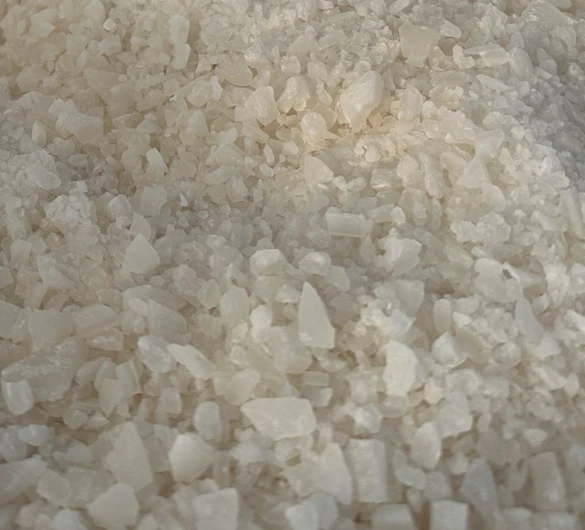
Competitive advantage
Advantage 1: Low iron content, suitable for applications requiring
whiteness Iron impurities are an important factor affecting the color and purity of certain industrial products. Iron-free aluminium sulfate adopts low-iron index control, making it suitable for production processes requiring specific whiteness and iron impurity content.
01
Advantage 2: Two optional alumina content specifications
Products with Al₂O₃ contents of 16.5% and 17% are provided to facilitate customers in selecting appropriate specifications according to process design, raw material ratios, and quality requirements.
02
Advantage 3: Good water solubility
The product is easily soluble in water and can be prepared into an aqueous solution according to actual process requirements, suitable for water treatment and industrial production systems requiring liquid dosing.
03
Advantage 4: Multiple forms to meet different operational needs
Powder products are suitable for processes requiring rapid preparation and metering; flake products are convenient for solid packaging and handling; lump products are suitable for production scenarios equipped with corresponding crushing or dissolving equipment.
04
Advantage 5: Wide industrial applications
It can be used in water treatment, paper sizing, titanium dioxide post-treatment, and other chemical production fields, offering raw material options for different industrial customers.
05
Product Parameters
ECOLINK TECHNOLOGY provides two specifications of iron-free aluminium sulfate: 16.5% and 17%. The following parameters are organized based on the original product technical data.
1.Quality Indicators of Iron-Free Aluminium Sulfate
|
Inspection Item |
16.5% Iron-Free Aluminium Sulfate |
17% Iron-Free Aluminium Sulfate |
|
Alumina (Al₂O₃) |
16.5% |
17% |
|
Iron Oxide (Fe₂O₃) |
0.005% |
0.004% |
|
pH Value |
3.0 |
3.0 |
|
Water-Insoluble Matter |
0.04% |
0.03% |
2. Basic Product Information
|
Item |
Technical Information |
|
Product Name |
Iron-Free Aluminium Sulfate |
|
English Name |
Iron-Free Aluminium Sulfate |
|
Chemical Formula |
Al₂(SO₄)₃ |
|
CAS Number |
10043-01-3 |
|
HS Code |
2833220000 |
|
Executive Standard |
HG/T 2225-2010 |
|
Product Form |
Powder, lump, flake, granule |
|
Product Appearance |
White or near-white solid |
|
Water Solubility |
Easily soluble in water |
|
Aqueous Solution Property |
Acidic |
3. How to Choose Between 16.5% and 17% Iron-Free Aluminium Sulfate?
When purchasing iron-free aluminium sulfate, customers usually compare alumina content, iron oxide content, and water-insoluble matter indicators.
The main differences between the two specifications are as follows:
16.5% Specification: Al₂O₃ content is 16.5%, Fe₂O₃ is 0.005%, and water-insoluble matter is 0.04%.
17% Specification: Al₂O₃ content is 17%, Fe₂O₃ is 0.004%, and water-insoluble matter is 0.03%.
The 17% specification features a higher alumina content, while its iron oxide and water-insoluble matter indicators are slightly lower.
For customers whose primary considerations are active ingredient content, impurity control, and unit treatment cost, comprehensive comparisons can be made by combining purchase prices, actual product test results, and process performance.
Product Features and Applications
Drinking Water Treatment
Iron-Free Aluminium Sulfate can be used as a coagulant in drinking water treatment processes to help remove suspended particles, colloidal substances, and partial turbidity from raw water.
Working Principle Many fine particles and colloids in raw water carry the same or similar surface charges, making them difficult to agglomerate and settle naturally.
When aluminium sulfate dissolves in water, aluminum ions undergo hydrolysis to form various charged hydrolysis products. These hydrolysis products can reduce the electrostatic repulsion between colloidal particles and promote flocs formation under appropriate conditions.
After rapid mixing, flocculation reaction, and sedimentation treatment, some suspended impurities in the water can settle along with the flocs, thereby improving effluent turbidity.
Problems Customers May Encounter
Raw water turbidity changes greatly, and the coagulation effect is unstable.
Chemical dosage is too high, increasing chemical costs and sludge treatment burdens.
Raw water pH or alkalinity is insufficient, leading to a decrease in coagulation efficiency.
Flocs are small or settle slowly, affecting subsequent filtration performance.
Iron impurities in ordinary aluminium sulfate do not meet the requirements of certain application scenarios.
ECOLINK's Product Matching Advantages
Provide low-iron aluminium sulfate specifications to help meet applications requiring specific iron impurity contents.
Provide two alumina content specifications of 16.5% and 17%.
Assist in product selection based on customer raw water quality and treatment processes.
It is recommended to determine the optimal dosage and suitable pH conditions through jar tests.
Note: For actual use in drinking water treatment, it should be confirmed that the product complies with drinking water treatment regulations, applicable standards, and sanitary requirements of the target market, and necessary water quality testing should be completed.
01
Industrial Wastewater Treatment
Industrial wastewater usually contains different types of suspended solids, colloidal particles, and other pollutants. Depending on the wastewater source and production process, water quality varies greatly.
Iron-Free Aluminium Sulfate can be used for coagulation and sedimentation pretreatment of certain industrial wastewaters, helping suspended particles aggregate and improving subsequent solid-liquid separation performance.
Common Application Scenarios
Textile and printing wastewater pretreatment.
Papermaking wastewater coagulation and sedimentation.
General industrial production wastewater treatment.
Coagulation treatment of industrial wastewater containing suspended solids.
Partial industrial circulating water and process water treatment.
Common Problems in Customer Application
Problem 1: High chemical dosage and high operating costs.
Possible reasons: Changes in raw water quality, mismatched chemical concentration, pH conditions, and mixing intensity.
Solutions: Compare flocculation effects under different dosages and pH conditions through jar tests to find economical dosing schemes meeting effluent requirements.
Problem 2: Fine flocs and unsatisfactory sedimentation effects.
Possible reasons: Insufficient or excessive coagulant dosage, unreasonable rapid mixing conditions, or fine particles difficult to settle present in raw water.
Solutions: Adjust coagulant dosage, mixing conditions, and flocculation time. If necessary, evaluate the feasibility of combining with polyacrylamide (PAM).
Problem 3: Differences in treatment effects across different batches.
Possible reasons: Changes in raw water quality, actual product specifications, preparation concentration, and dosing conditions.
Solutions: Focus on product indicators such as Al₂O₃, Fe₂O₃, and water-insoluble matter while recording jar tests and on-site operation data.
Application Advantages Rational use of iron-free aluminium sulfate helps improve the coagulation and sedimentation effect of certain industrial wastewaters, reduces the burden of suspended solids on subsequent treatment units, and creates conditions for downstream filtration, biochemical, or advanced treatment.
02
Paper Manufacturing
Aluminium sulfate is a commonly used inorganic chemical raw material in the paper industry, applicable to paper sizing systems and related production processes.
During papermaking, aluminium sulfate can participate in the chemical equilibrium of the sizing system, help adjust the ionic environment within the system, and be used in combination with other sizing chemicals.
Customer Concerns
Product iron content may affect the appearance requirements of certain high-whiteness paper products.
Water-insoluble matter may increase the impurity burden in the production system.
Variations in chemical indicators across different batches may affect process stability.
Unreasonable product dissolution and dosing methods may affect production operations.
Product Advantages
Low-iron index, suitable for paper manufacturing processes requiring whiteness.
Provide different alumina content specifications for easy process selection.
Provide powder, flake, and lump product options.
Confirm appropriate product specifications and dosing methods according to customer production systems.
Specific application effects depend on pulp properties, sizing agent types, system pH, addition sequence, and production conditions.
03
Titanium Dioxide Post-Treatment
Iron-Free Aluminium Sulfate can be used in production processes related to titanium dioxide post-treatment as an industrial chemical raw material.
For titanium dioxide and other production processes sensitive to whiteness and impurity content, the iron content in raw materials is a quality indicator worthy of attention.
Common Customer Concerns
Iron impurities may affect the color and purity requirements of the final product.
Different alumina contents may affect production formulations.
Water-insoluble matter may affect the material uniformity of certain production processes.
Raw material batch stability affects continuous production management.
Product Matching Advantages
By providing clear indicators of alumina, iron oxide, and water-insoluble matter, it facilitates customers in carrying out raw material acceptance and process adaptation testing.
Customers are recommended to conduct small-scale or pilot-scale verification combined with their own titanium dioxide post-treatment processes before official bulk procurement.
04
Other Industrial Applications
Iron-Free Aluminium Sulfate can also be used in other chemical production fields, such as:
Catalyst carrier-related production.
Foam fire extinguishing agent production.
Thermal insulation and flame-retardant material production.
Refractory material additives.
Molecular sieve and other chemical raw material production.
For special industrial uses, customers are advised to provide process requirements, raw material indicators, and final product quality requirements in advance to confirm product applicability.
05
Product Forms & Details
ECOLINK TECHNOLOGY provides multiple forms of Iron-Free Aluminium Sulfate, including flake, powder, 2–10 cm lump, and 2–5 mm / 2–8 mm granular products. Different forms are suitable for different feeding equipment, dissolution methods, production processes, and storage requirements.
Customers can choose the appropriate product form based on actual applications, processing capacity, and operating habits.
Comparison of Product Forms
|
Comparison Item |
Powder |
Lump |
Flake |
Granular |
|
English Name |
Powder |
Lump |
Flake |
Granular |
|
Product Appearance |
White powder |
Irregular lump |
Thin flake |
Granular |
|
Product Specification |
Powder |
2–10 cm |
Flake |
2–5 / 2–8 mm |
|
Feeding Method |
Weighing, preparation |
Crushing or dissolving |
Solid feeding |
Quantitative feeding |
|
Dust Management |
Attention needed |
Relatively easy to manage |
Relatively easy to manage |
Relatively easy to manage |
|
Dissolution Focus |
Feeding speed, clumping |
Block size |
Flake size |
Particle size |
|
Applicable Needs |
Rapid metering & solution preparation |
Solid raw material usage |
Routine solid feeding |
Granular metering & feeding |
Note: The actual dissolution efficiency of different forms depends on product size, water temperature, stirring conditions, and preparation concentration. Specific application performance is recommended to be confirmed through actual process testing.

Powder iron-free aluminium sulfate appears as a white or near-white powder with a large specific surface area, making it suitable for industrial production processes that require weighing, solution preparation, and quantitative dosing.
Product Features
White or near-white powder with uniform appearance.
Low-iron specifications available to meet applications requiring high product purity.
Convenient for weighing, metering, and proportional preparation.
Suitable for dosing after preparing chemical solution in dissolving tanks.
Applicable to various water treatment and industrial production processes.
Main Application Fields
Drinking water treatment and industrial wastewater coagulation treatment.
Paper industry and sizing processes.
Titanium dioxide production and post-treatment.
Chemical raw material preparation.
Other industrial production requiring powdered aluminium sulfate.
Usage Recommendations When preparing powder products, it is recommended to control the feeding speed and stirring intensity to avoid local clumping caused by large single additions. The dissolution time and dosing method should be determined based on actual water temperature, target concentration, and equipment conditions. Meanwhile, pay attention to dust management and maintain ventilation in the operating environment.
The specification of lump iron-free aluminium sulfate is 2–10 cm, appearing as irregular solid lumps. It is suitable for industrial customers with solid raw material storage, crushing, or dedicated dissolving equipment.
Product Features
White or near-white solid lump.
Product size of 2–10 cm.
Convenient for packaging and transportation in solid product form.
Can be crushed or dissolved according to production needs.
Compared with powder products, dust is usually easier to control during routine loading and unloading.
Main Application Fields
Industrial water treatment and sewage treatment.
Paper industry.
Chemical raw material processing.
Industrial production requiring solid aluminium sulfate as a raw material.
Usage Recommendations The dissolution speed of lump products is closely related to block size, contact area, water temperature, and stirring conditions. For customers requiring continuous chemical solution preparation, it is recommended to evaluate the dissolving tank volume, stirring capacity, and dissolution time in advance. If higher dissolution efficiency is needed, appropriate crushing prior to use can be considered based on equipment conditions.
Flake iron-free aluminium sulfate appears as white or near-white thin flakes with a distinct flaky structure, suitable for industrial applications requiring solid raw material storage, handling, and subsequent dissolution and preparation.
Product Features
White or near-white flake appearance.
Low-iron specifications available.
Flaky structure, convenient for solid product packaging and handling.
Compared with powder products, it usually helps reduce dust during routine loading and unloading operations.
Can be dissolved and prepared according to production needs.
Main Application Fields
Drinking water and industrial water treatment.
Paper sizing and paper production.
Titanium dioxide production and post-treatment.
Chemical raw material preparation.
Other industrial production applications.
Usage Recommendations The dissolution efficiency of flake products is related to flake size, feeding speed, water temperature, and stirring conditions. It is recommended to use a batch feeding method to avoid massive product accumulation in the dissolving tank. For continuous production processes, a small-scale dissolution test can be conducted first to determine appropriate feeding speed and stirring parameters.
Granular iron-free aluminium sulfate features a relatively uniform granular structure, available in two particle size specifications of 2–5 mm and 2–8 mm. It is suitable for industrial customers with specific requirements for product particle size, feeding operations, and solid raw material management.
Product Features
White or near-white granular appearance.
Provides two particle size specifications: 2–5 mm and 2–8 mm.
Relatively uniform particle size, convenient for metering and solid feeding.
Compared with powder products, dust during loading and unloading is usually easier to control.
Suitable for dissolution and preparation according to production processes.
Main Application Fields
Drinking water treatment and industrial wastewater treatment.
Paper industry and sizing processes.
Titanium dioxide production and post-treatment.
Chemical raw material processing.
Other industrial applications requiring granular aluminium sulfate.
Usage Recommendations Granular products can adopt direct feeding or dissolution preparation methods according to actual equipment conditions. Differences in specific surface area and dissolution performance may exist between 2–5 mm and 2–8 mm granules. It is recommended to choose the appropriate specification based on dissolving tank design, stirring capacity, and production requirements.
Product Quality and Quality Control
For purchasers of iron-free aluminium sulfate, attention should not only be paid to product price, but also comprehensively consider active ingredients, impurity control, product form, and batch stability.
1. Key Quality Indicator Analysis
Alumina Content (Al₂O₃) Alumina content is one of the important indicators measuring the active ingredients of aluminium sulfate. Under the same application conditions, alumina content affects the amount of aluminum components provided per unit of product. Therefore, when comparing products of different specifications, customers should focus on active ingredient content rather than just the purchase price per ton.
Iron Oxide Content (Fe₂O₃) Iron oxide content is an important control indicator for iron-free aluminium sulfate. For papermaking, titanium dioxide post-treatment, and other production processes sensitive to whiteness and iron impurities, lower Fe₂O₃ content helps reduce potential impacts brought by iron impurities.
Water-Insoluble Matter Water-insoluble matter is a quality indicator that customers need to focus on. If there are many insoluble impurities in the product, it may increase sediment in the prepared solution, affecting certain processes requiring high solution cleanliness. Therefore, customers are advised to clarify water-insoluble matter requirements during procurement and conduct tests based on actual usage conditions.
pH Value Aqueous solutions of aluminium sulfate are acidic, and pH values are affected by preparation concentration, water quality, and testing conditions. In water treatment applications, the aluminum salt coagulation effect is closely related to pH and raw water alkalinity. Customers should conduct coagulation tests based on actual water quality rather than judging treatment effects solely by product pH.
2. Professional Knowledge in Water Treatment: Why are pH and Alkalinity Important?
When aluminium sulfate hydrolyzes in water, it consumes alkalinity in the water.
Therefore, when raw water alkalinity is insufficient, adding aluminium sulfate may cause the water pH to drop, thereby affecting the formation of aluminum salt hydrolysis products and coagulation performance.
If pH conditions are unsuitable, the following situations may occur:
Inadequate flocs formation.
Unsatisfactory sedimentation of suspended particles.
Increased chemical dosage.
Difficulty in stable control of effluent turbidity.
Increased operating load of the filtration system.
Therefore, when selecting iron-free aluminium sulfate, besides focusing on Al₂O₃ content, attention should also be paid to raw water pH, alkalinity, turbidity, water temperature, and other factors.
3. How to Optimize Chemical Dosage via Jar Tests?
The Jar Test is a commonly used coagulant selection and dosage optimization method in water treatment engineering.
It is recommended to proceed according to the following steps:
Take representative raw water samples of identical volume.
Set different aluminium sulfate dosages.
Add chemicals under rapid stirring conditions to thoroughly mix the chemicals with water.
Adjust stirring conditions to promote tiny particles forming larger flocs.
Let settle statically, and observe floc size, formation speed, and sedimentation status.
Measure residual turbidity and other target water quality indicators of each group of samples.
Comprehensively compare treatment effects, chemical consumption, and sludge conditions to select appropriate operating conditions.
For actual engineering, test results should also be rechecked regularly based on raw water changes.
ECOLINK TECHNOLOGY can assist in communicating iron-free aluminium sulfate specification selection and application testing directions based on water quality data and process requirements provided by customers.
4. Product Documentation and Quality Files
ECOLINK TECHNOLOGY attaches importance to the accuracy of product technical data and quality information, and can communicate the following files based on actual supply batches and customer requests:
COA: Certificate of Analysis.
TDS: Technical Data Sheet.
SDS: Safety Data Sheet.
MSDS: Material Safety Data Sheet.
Product specification and packaging information.
The availability of specific documents, applicable versions, and test data shall be subject to confirmation by the actual product supplier.
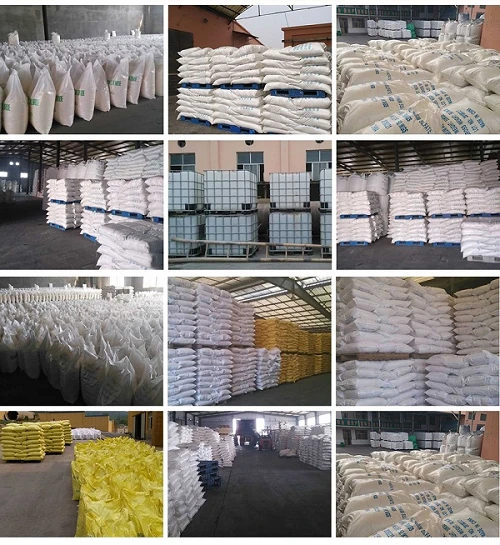
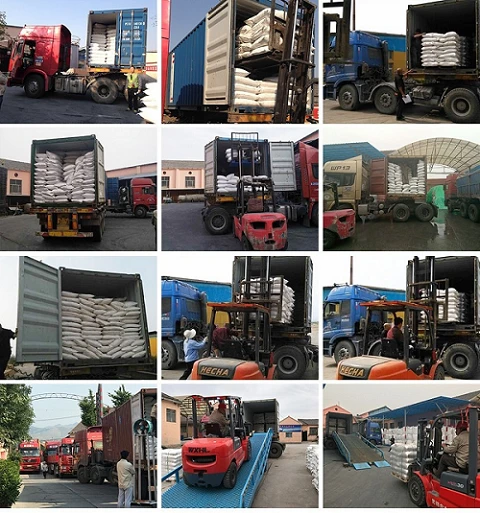
Packaging, Storage, Delivery and Service
1.Product Packaging Specifications
Iron-Free Aluminium Sulfate can be packaged in appropriate ways according to customer purchase quantities, packaging requirements, and export transportation conditions.
Common packaging includes:
|
Packaging Type |
Specification |
|
Plastic-lined woven bag |
25 kg |
|
Plastic-lined woven bag |
50 kg |
|
Ton bag (Jumbo bag) |
1000 kg |
Export packaging can be communicated and confirmed according to packaging requirements and shipping mark information provided by customers.
For bulk procurement customers, appropriate packaging schemes can be determined based on order quantities, transportation methods, and destination port requirements.
2. Storage Precautions
Iron-Free Aluminium Sulfate easily absorbs moisture and caking when exposed to humid air for a long time; therefore, correct storage methods are very important.
Recommendations:
Store in a dry, ventilated warehouse.
Keep original packaging intact and sealed.
Avoid direct contact of the product with moisture.
Avoid long-term exposure to humid air.
Use up as soon as possible after opening, and reseal remaining products.
Products from different batches are recommended to be stored in separate zones with clear batch labeling.
Reasonable warehousing management helps reduce the risk of moisture absorption and caking, maintaining good application states of the product.
3. Transportation Precautions
During export transportation, attention should be focused on packaging integrity and moisture-proof measures for iron-free aluminium sulfate.
It is recommended to select suitable packaging and container moisture-proof schemes according to transportation distance, transportation mode, and destination climate conditions.
For ocean export, special attention should be paid to the internal humidity of containers and moisture-proof protection of goods during stuffing.
4. ECOLINK TECHNOLOGY Supply Services
ECOLINK TECHNOLOGY focuses on water treatment chemicals and equipment, committed to providing global customers with reliable procurement support through product matching, technical support, and one-stop supply services.
For iron-free aluminium sulfate products, we provide the following services:
Product Selection Support: Assist in confirming suitable product specifications based on customer requirements for alumina content, iron content, water-insoluble matter, and product form.
Application Requirement Communication: Understand customer specific process requirements targeting drinking water treatment, industrial wastewater treatment, paper manufacturing, and titanium dioxide post-treatment.
Technical Data Support: Communicate relevant technical data such as COA, TDS, and SDS based on actual supplied products.
Packaging Scheme Communication: Assist in confirming packaging specifications according to customer purchase quantities, export requirements, and storage conditions.
Export Supply Coordination: Coordinate product supply, packaging, logistics, and export-related matters according to order requirements.
Order Follow-up and After-sales Communication: Timely follow up on technical, packaging, transportation, and quality feedback during product procurement to help customers improve procurement efficiency.
Our goal is not only to provide products, but also to build long-term and stable cooperative relationships with customers through accurate product matching and continuous supply services.
Frequently Asked Questions (FAQ)
Q1: What is iron-free aluminium sulfate? What is the difference between it and ordinary aluminium sulfate?
A: Iron-Free Aluminium Sulfate is an aluminium sulfate product with a lower iron oxide content, and the main difference lies in the control level of iron impurities. For applications requiring whiteness or iron impurity content such as drinking water treatment, paper manufacturing, and titanium dioxide post-treatment, customers usually focus on the Fe₂O₃ indicator.
Q2: What product forms are available for iron-free aluminium sulfate?
A: Three product forms are mainly provided:
Powder iron-free aluminium sulfate.
Lump iron-free aluminium sulfate.
Flake iron-free aluminium sulfate. The original specification of lump products is 2–10 cm. Different forms can be selected according to customer feeding equipment, dissolution methods, and transportation requirements.
Q3: What are the differences between 16.5% and 17% iron-free aluminium sulfate?
A: The main differences lie in alumina content and partial impurity indicators:
|
Item |
16.5% |
17% |
|
Al₂O₃ |
16.5% |
17% |
|
Fe₂O₃ |
0.005% |
0.004% |
|
pH |
3.0 |
3.0 |
|
Water-Insoluble Matter |
0.04% |
0.03% |
The 17% product features higher alumina content, while iron oxide and water-insoluble matter indicators listed in original data are slightly lower. Customers should select based on product prices, process requirements, and actual test results.
Q4: Can iron-free aluminium sulfate be used for drinking water treatment?
A: Aluminium sulfate can be used as a coagulant in drinking water treatment to help remove suspended solids and colloidal particles from water. However, whether a specific product can be used for drinking water treatment requires confirmation of applicable product standards, target market regulations, and relevant health requirements; its suitability for drinking water cannot be judged solely by low-iron indicators.
Q5: Why does the water pH drop after adding aluminium sulfate?
A: Aluminium sulfate undergoes hydrolysis reactions when dissolved in water, and the hydrolysis process consumes alkalinity in the water, which may lead to a drop in water pH. If raw water alkalinity is low, excessive addition of aluminium sulfate may cause the pH to drop to an unsuitable range, affecting coagulation performance. It is recommended to determine appropriate dosages and operating pH conditions through raw water testing and jar tests.
Q6: What is the dosage of iron-free aluminium sulfate?
A: There is no fixed dosage applicable to all water qualities. The dosage is affected by factors such as raw water turbidity, colloidal properties, pH, alkalinity, water temperature, and treatment processes. It is recommended to compare different dosages through jar tests to determine actual operating conditions.
Q7: Can iron-free aluminium sulfate be used together with PAM?
A: In some water treatment processes, aluminium sulfate can be used in combination with polyacrylamide (PAM). Aluminium sulfate mainly undertakes coagulation, while PAM can play a flocculation role based on characteristics such as ionic type and molecular weight to promote further aggregation of tiny flocs. However, the dosing sequence, interval time, and dosage of the two chemicals need to be determined through tests; the two chemicals should not be directly mixed together for dosing.
Q8: Why is iron-free aluminium sulfate prone to caking?
A: Iron-free aluminium sulfate is hygroscopic. When exposed to humid air for a long time, the product may absorb moisture and form cakes. It is recommended to store in a dry environment, keep the packaging sealed, and avoid rain and moisture.
Q9: Which form of iron-free aluminium sulfate is better: powder, flake, or lump?
A: The three product forms each have characteristics, and there is no absolute best form. Powder products are convenient for weighing and preparation; flake products help reduce dust in general operations; lump products are suitable for customers equipped with corresponding solid handling and dissolving equipment. Selection should be made based on actual production equipment, dissolution efficiency, and operational habits.
Q10: What are the packaging specifications for iron-free aluminium sulfate?
A: Common packaging includes 25 kg, 50 kg plastic-lined woven bags, and 1000 kg ton bags. Export packaging can be communicated and confirmed according to customer requirements.
Q11: What indicators should be focused on when purchasing iron-free aluminium sulfate?
A: It is recommended to focus on:
Al₂O₃: Alumina content.
Fe₂O₃: Iron oxide content.
pH: Product solution acid-base index.
Water Insoluble Matter.
Appearance and form.
Packaging methods and specifications. For special applications, corresponding quality testing items should also be added according to customer processes.
Q12: How to obtain quotes and technical data for iron-free aluminium sulfate?
A: Customers can send the following information to ECOLINK TECHNOLOGY:
Required product form: powder, lump, or flake.
Required alumina content: 16.5% or 17%.
Estimated purchase quantity.
Target application field.
Packaging and transportation requirements.
Destination port or delivery location. We will communicate product specifications, supply schemes, and quote information based on specific procurement demands.
Company Information: ECOLINK TECHNOLOGY
Focusing on Water Treatment Chemicals and Equipment Supply
ECOLINK TECHNOLOGY focuses on water treatment chemicals and water treatment equipment, dedicated to providing global customers with product matching, technical support, and one-stop supply services.
Our main products include:
Water Treatment Chemicals
Polyacrylamide (PAM): Cationic, anionic, non-ionic, and emulsion products.
Polyaluminum Chloride (PAC): Drinking water grade and industrial grade products.
Iron-Free Aluminium Sulfate.
Other water treatment-related chemicals.
Water Treatment Equipment
Reverse Osmosis (RO) pure water equipment.
Ultrafiltration (UF) equipment.
EDI ultrapure water equipment.
Industrial wastewater treatment equipment.
Sewage treatment systems.
Seawater desalination equipment.
We understand that requirements for product quality and technical indicators differ across countries, industries, and production processes. Therefore, we value customers' actual application requirements, assist customers in selecting appropriate product specifications, and provide corresponding technical data and supply service support.
Whether you are a water treatment engineering company, a chemical product distributor, a paper enterprise, or an industrial raw material purchaser, ECOLINK TECHNOLOGY looks forward to establishing a long-term and stable cooperative relationship with you.
Welcome to contact us to obtain product specifications, technical data, and procurement quotes for iron-free aluminium sulfate.
Hot Tags: iron-free aluminium sulfate, China iron-free aluminium sulfate manufacturers, suppliers, factory